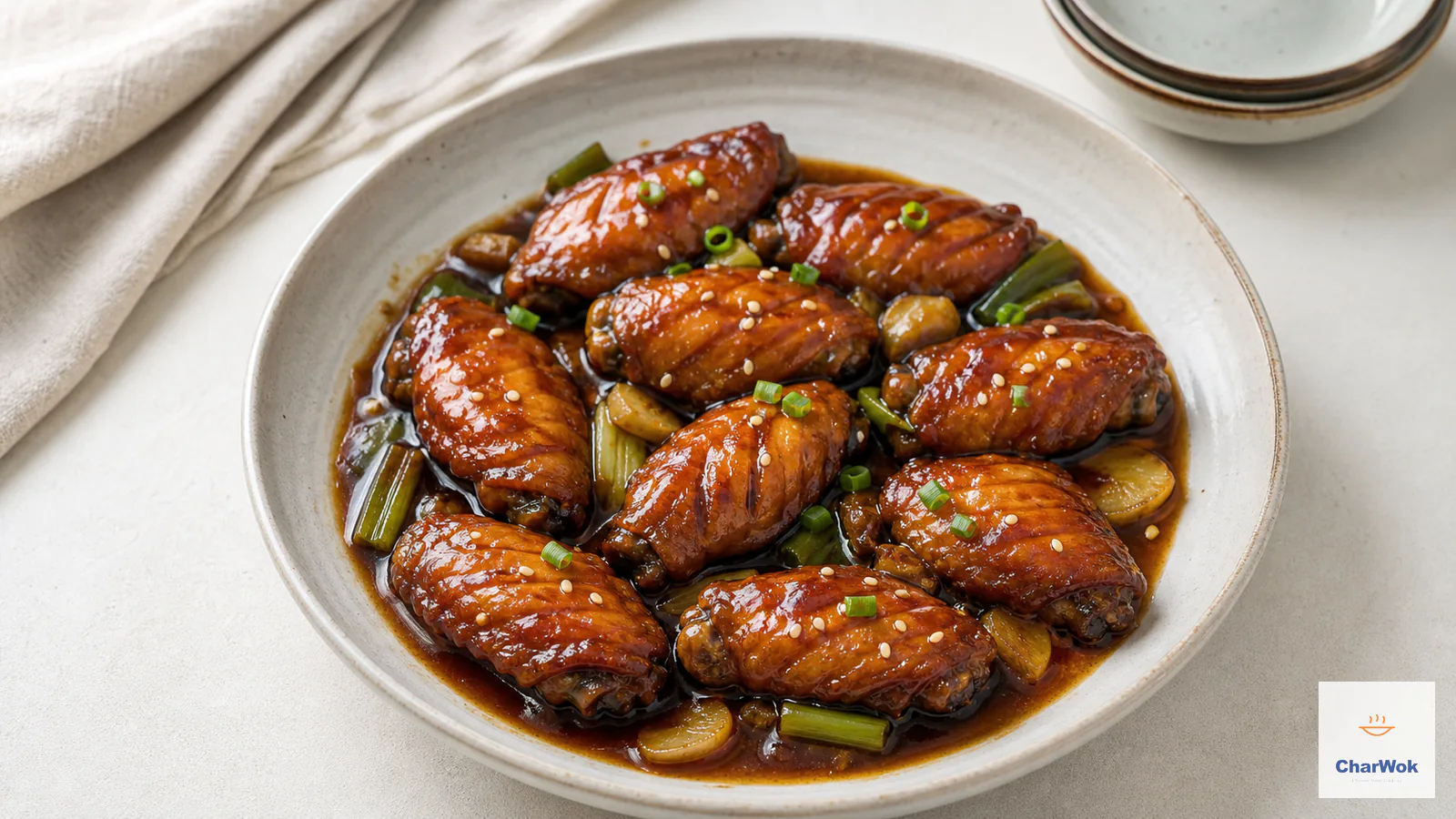
Cola chicken wings are browned, braised with regular cola, soy sauce, ginger, and scallion, then coated in the reduced cooking liquid. The covered cooking time is only a starting point: check several meaty drumettes and flats, and continue cooking until every piece tested reaches 165°F (74°C). Reduce the sweet sauce only after the wings are safely cooked.
The whole trick is understanding that a can of cola is really just sugar, water, acid, and a little caramel color in one convenient package. In a classic red-braised pork belly you achieve the same shine with rock sugar melted into hot oil. Here the soda does both jobs at once. Once you see it that way, the recipe stops feeling like a novelty and starts feeling like a very sensible braise.
At a glance. Use one 330 ml (12 oz) can of regular, sugar-sweetened cola for roughly 900 g (2 lb) of wings. After about 15 minutes covered, measure several of the thickest drumettes and flats without touching bone; every piece tested must reach 165°F (74°C). Move the cooked wings to a clean plate, reduce the sauce until it lightly coats a spoon, then return the wings briefly to glaze.
What this dish actually is
Cola chicken wings, Kě Lè Jī Chì (可乐鸡翅), are a modern Chinese home-style braise that uses regular cola as part of the sweet cooking liquid. Reliable evidence for a precise date, inventor, or regional origin is limited, so this recipe does not assign one. The useful comparison is culinary: like other red-braised dishes, it balances sugar, soy sauce, aromatics, and reduction.
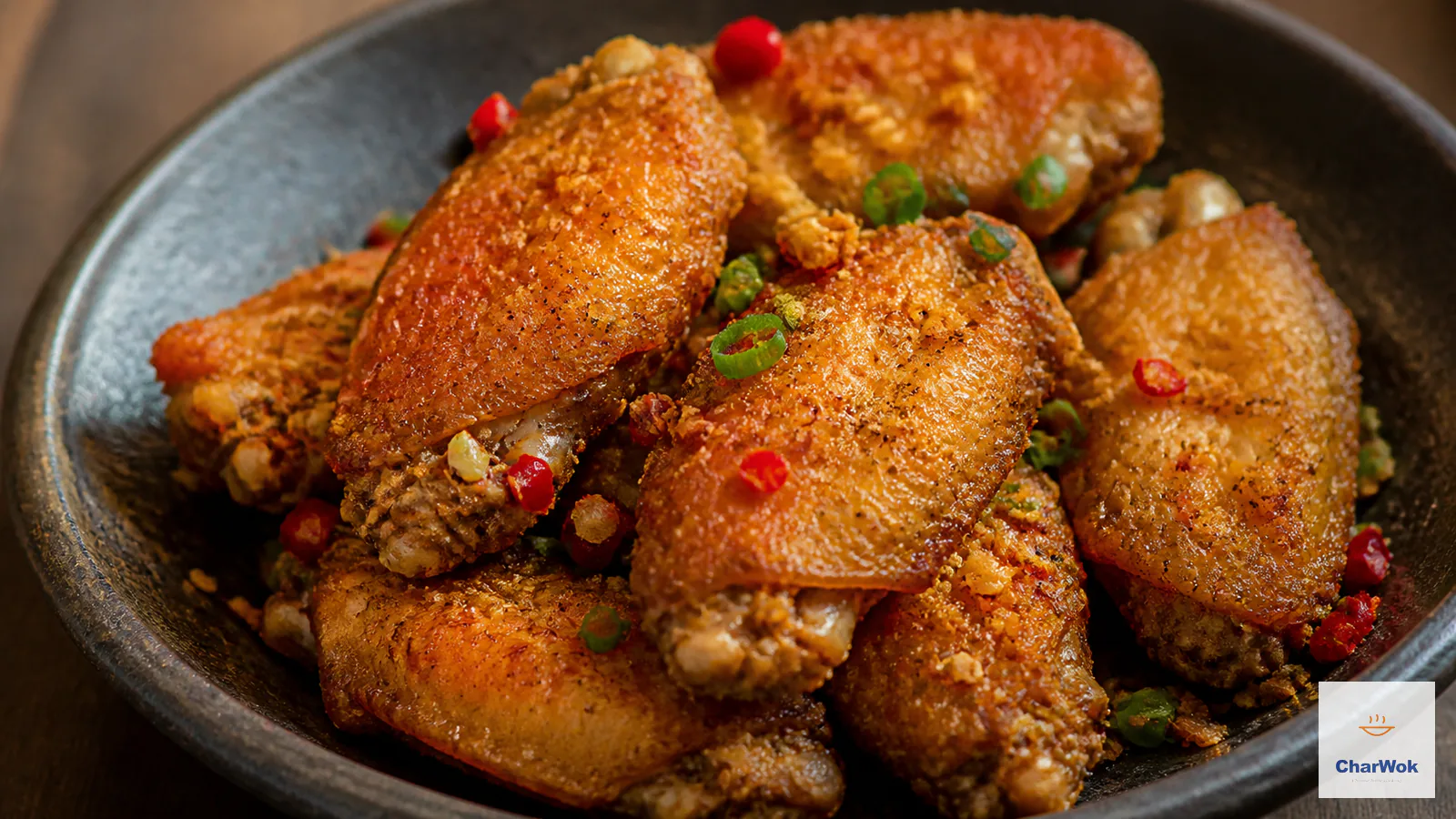
What you end up with is closer in spirit to a small braise like three-cup chicken than to deep-fried wings such as salt and pepper wings. The skin turns mahogany and sticky, the meat pulls cleanly off the bone, and the sauce is sweet-savory with a faint warmth from ginger and (if you use them) a whole star anise and bay leaf.
Why regular cola and not diet
Use a regular cola whose nutrition label lists sugar. This recipe relies on that sugar concentrating as water evaporates. Zero-sugar and diet formulas vary by country and product, but they do not supply the same sugar needed for this reduction, so they are not a direct substitute.
Coca-Cola or Pepsi can both be used, but check the label because sugar content and package size vary by market. Choose an original, sugar-sweetened version rather than a flavored or zero-sugar one. Unlike adding a measured amount of rock sugar and water, cola brings its own acidity and flavoring, so taste the finished sauce before adding more salt.
The ingredients
Ingredients at a glance
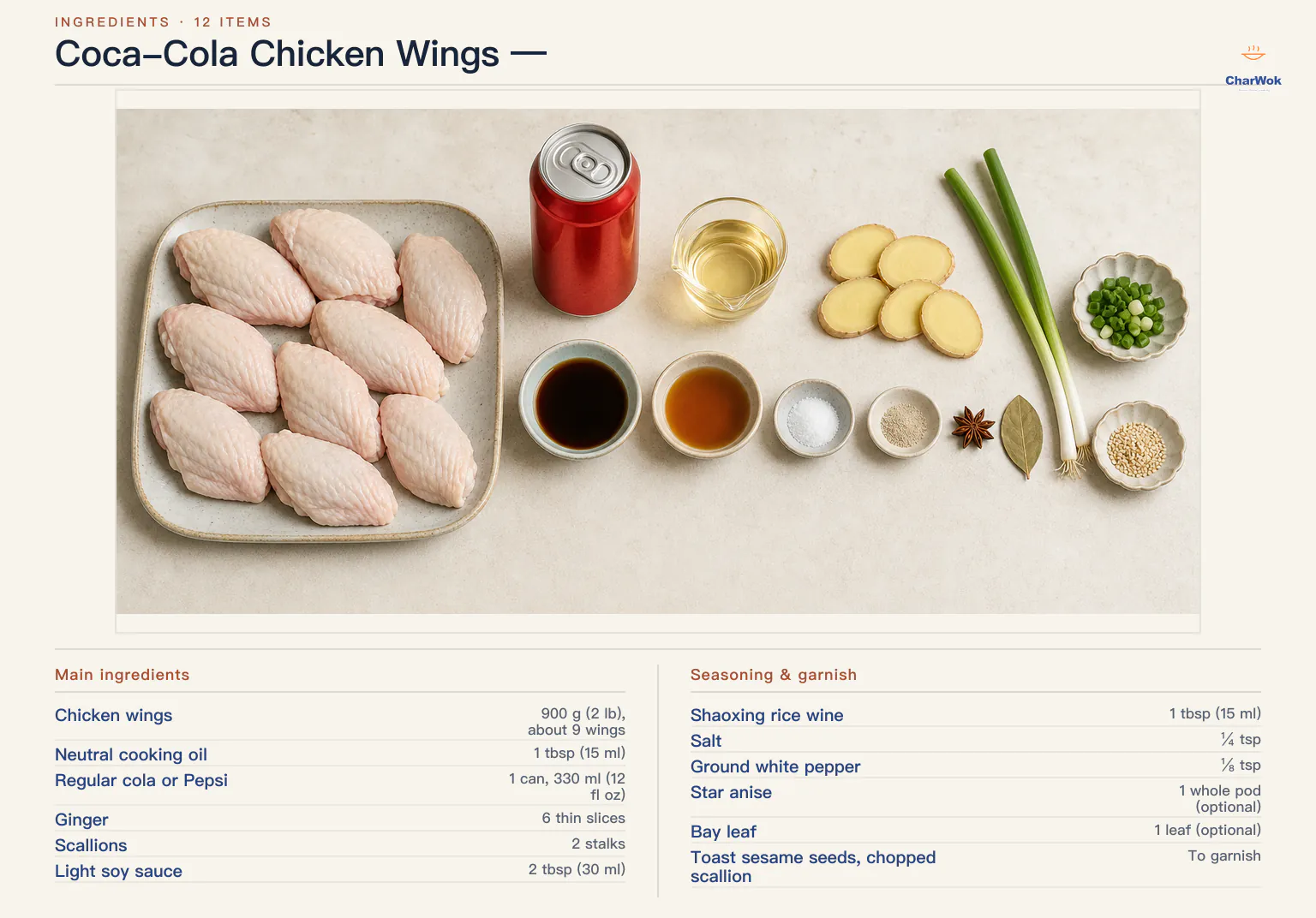
| Ingredient | Amount | Notes / substitute |
|---|---|---|
| Chicken wings | 900 g (2 lb), about 9 wings | Drumettes, flats, and tips. See cuts below. |
| Neutral cooking oil | 1 tbsp (15 ml) | Peanut, canola, or grapeseed. |
| Regular cola or Pepsi | 1 can, 330 ml (12 fl oz) | Full-sugar only. Not diet or zero. |
| Ginger | 6 thin slices | Cut coins against the grain; no need to peel. |
| Scallions | 2 stalks | Left whole, tied loosely, plus more chopped for garnish. |
| Light soy sauce | 2 tbsp (30 ml) | The salty, reddish-brown everyday one; see my light vs. dark soy sauce guide. |
| Shaoxing rice wine | 1 tbsp (15 ml) | Dry sherry is the closest Western substitute. |
| Salt | ¼ tsp | Taste the reduced sauce first; you may want a pinch more. |
| Ground white pepper | ⅛ tsp | Milder and cleaner than black; black pepper works. |
| Star anise | 1 whole pod (optional) | Skip if you dislike licorice notes. |
| Bay leaf | 1 leaf (optional) | Any culinary bay leaf. |
| Toast sesame seeds, chopped scallion | To garnish | Optional but worth it. |
A word on which cut to buy
Cut whole wings at the joints into drumette, flat, and tip. The tips can be frozen for stock. Removing them lets the meatier pieces sit flatter in the pan for more even browning and makes it easier to measure the thickest sections later.
Pre-separated flats and drumettes also work. Bone-in drumsticks, thighs, or boneless thighs need different cooking times because their thickness differs; do not rely on adding a fixed number of minutes. Check the thickest part without touching bone and continue until each tested piece reaches 165°F (74°C).
Equipment: a wok, or the smallest pot you own
A carbon-steel wok concentrates the liquid around the wings. A small pot or straight-sided skillet that holds the pieces in roughly one layer also works. In a much wider pan, the sauce evaporates faster, so lower the heat as needed and begin checking both temperature and sauce level earlier.
The method, step by step
The recipe breaks into three phases with very different goals: brown, braise, and reduce. Get each one right and the dish is almost foolproof.
- Prep and dry the wings. Cut each wing into three at the joints and remove the tips. Pat every piece thoroughly dry with paper towels. Wet wings will steam instead of sear, and you will never get the color that gives the final glaze something to cling to.
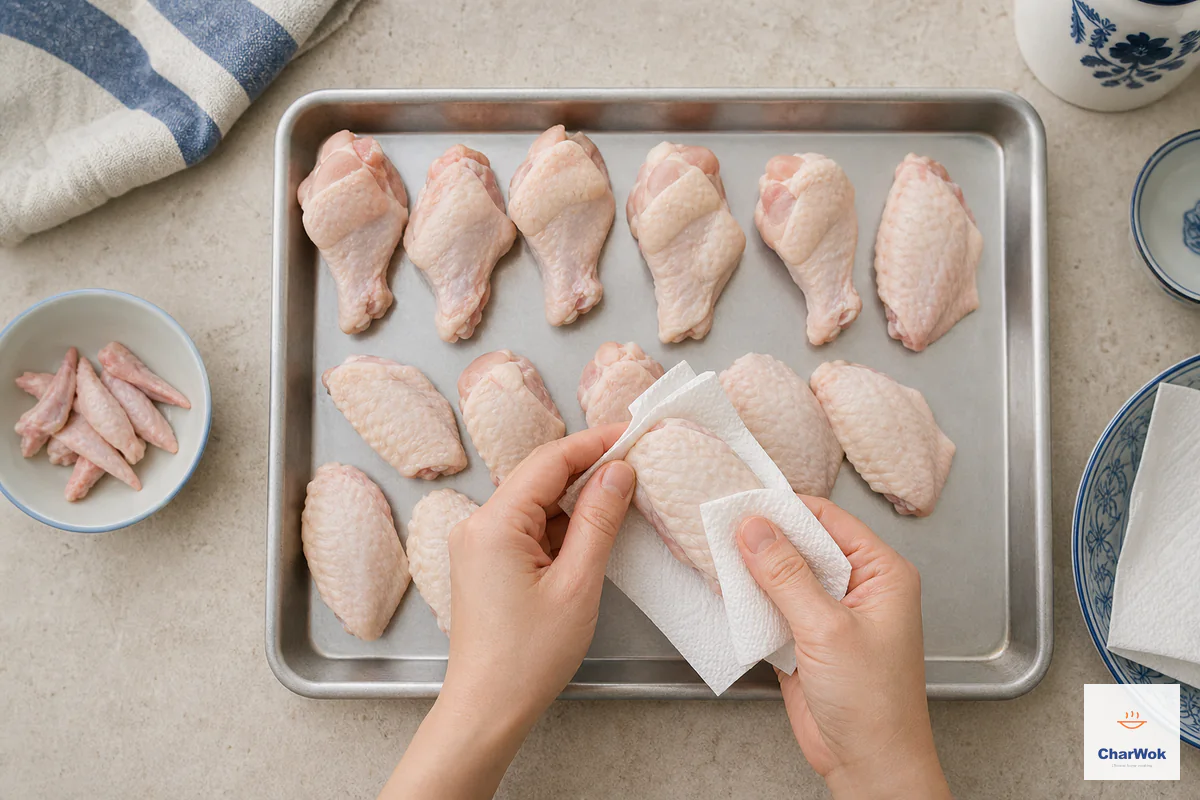
Cut at the joints, remove the tips, and press every surface completely dry so the skin sears instead of steaming.
- Brown the skin, then flip once. Heat the oil in your wok over medium. Lay the wings in skin-down in a single layer. Now leave them alone for about three minutes. Resist the urge to shuffle them around; the skin needs uninterrupted contact with the hot metal to release on its own. When they lift cleanly and are light gold, flip and do the same to the other side. This browning is shallow, not a fry; you are rendering some fat and starting the Maillard reactions that will deepen later in the cola. You do not need to cook them through.
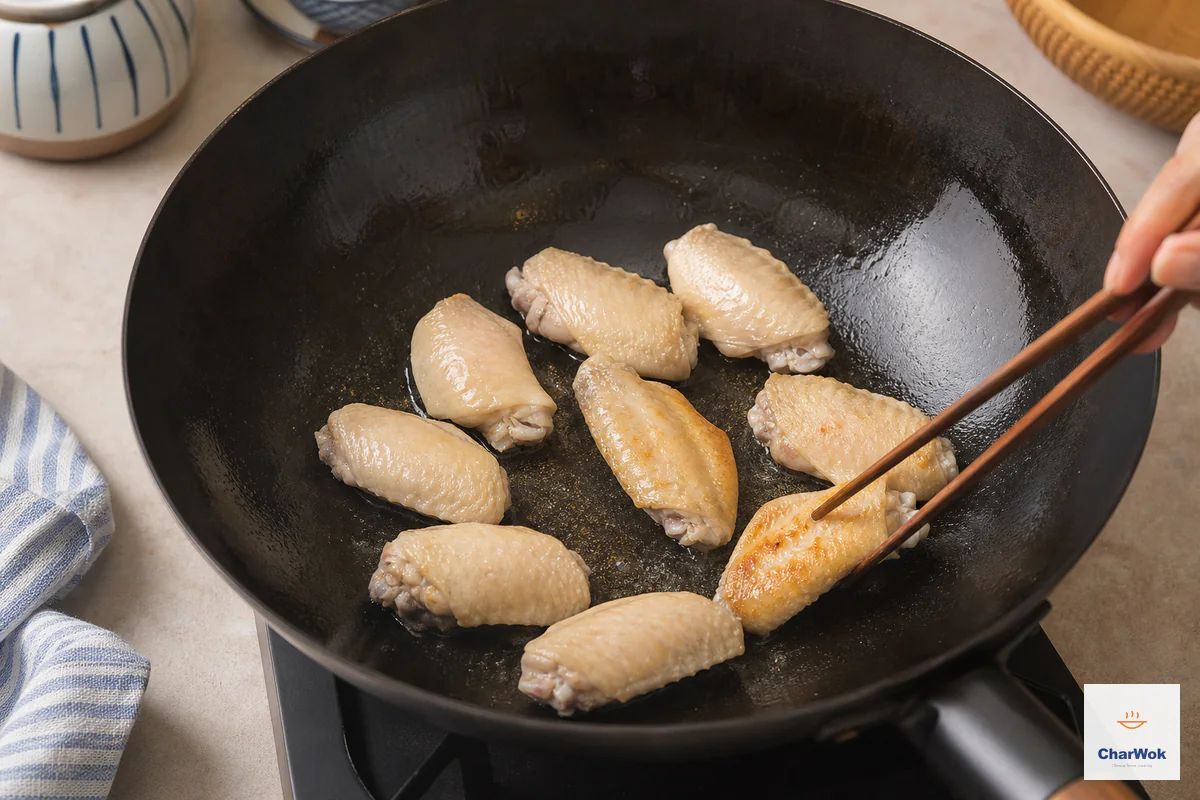
Leave the skin undisturbed over medium heat until it releases, then flip once and brown the second side lightly without cooking through.
- Deglaze with the cola. Pour in the can of cola along with the ginger slices, whole scallion stalks, light soy sauce, Shaoxing rice wine, salt, white pepper, star anise, and bay leaf. Bring it to a full rolling boil on high heat. Expect a brief foaming as the carbonation releases; that is fine.
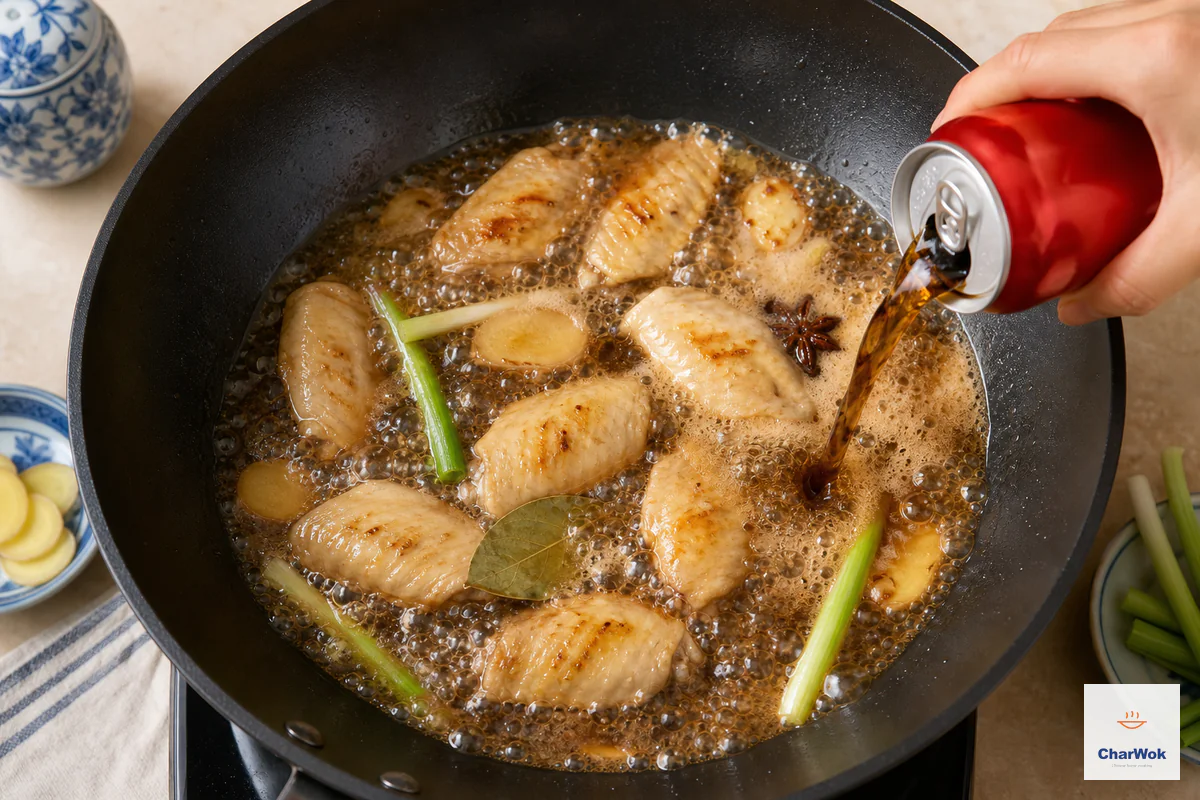
Add the full-sugar cola, aromatics and seasonings, then bring the still-thin braising liquid to a full rolling boil.
- Cover, braise, and check the temperature. Drop the heat to medium, cover, and keep the liquid bubbling steadily. Flip the pieces once after about 8 minutes. At about 15 minutes, check several of the thickest drumettes and flats with an instant-read thermometer, inserting it into the meat without touching bone. If any tested piece is below 165°F (74°C), continue cooking and recheck. Time alone is not proof of doneness; see the USDA chicken-wing guidance.
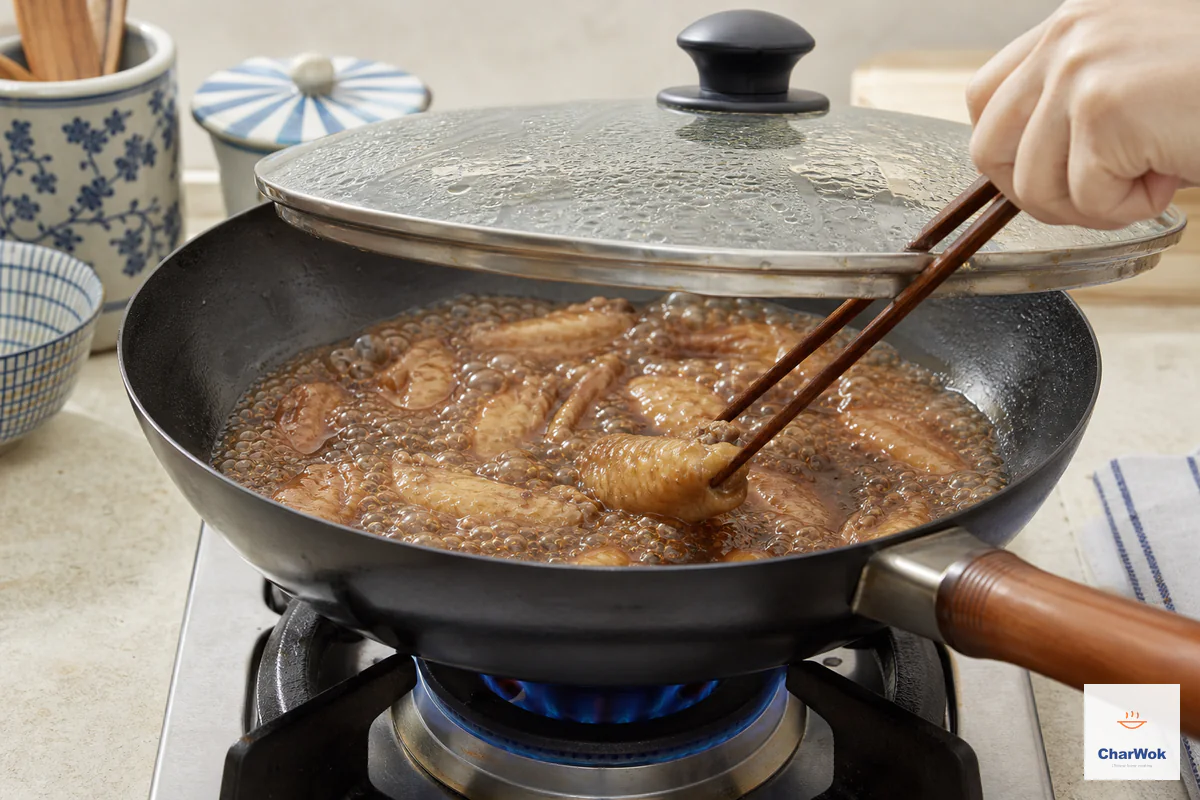
Cover and keep the liquid bubbling; after about 15 minutes, check several thick flats and drumettes away from bone, and continue until every piece tested reaches 165°F (74°C).
- Move the cooked wings out, then reduce. Once every tested piece reaches 165°F (74°C), transfer all wings to a clean plate with clean utensils. Remove the ginger, scallion, star anise, and bay leaf. Boil the uncovered sauce briskly so it shrinks and darkens, but stay at the stove because the concentrated sugar can scorch quickly.
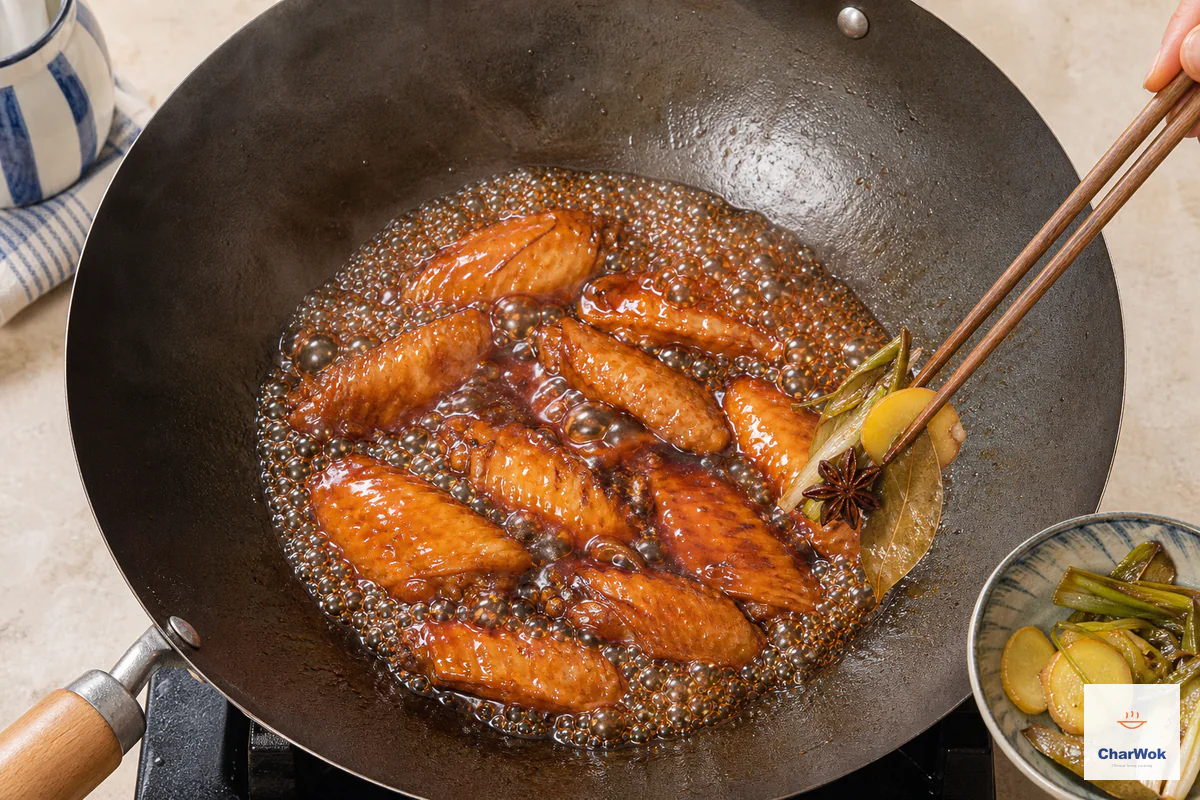
Once the tested wings reach 165°F (74°C), move them to a clean plate, remove the aromatics, and reduce the uncovered sauce separately.
- Coat, then stop early. When the sauce lightly coats a spoon but still flows, return the cooked wings and toss briefly. Remove the wok from the heat before the glaze looks fully thick; it tightens further as it cools.
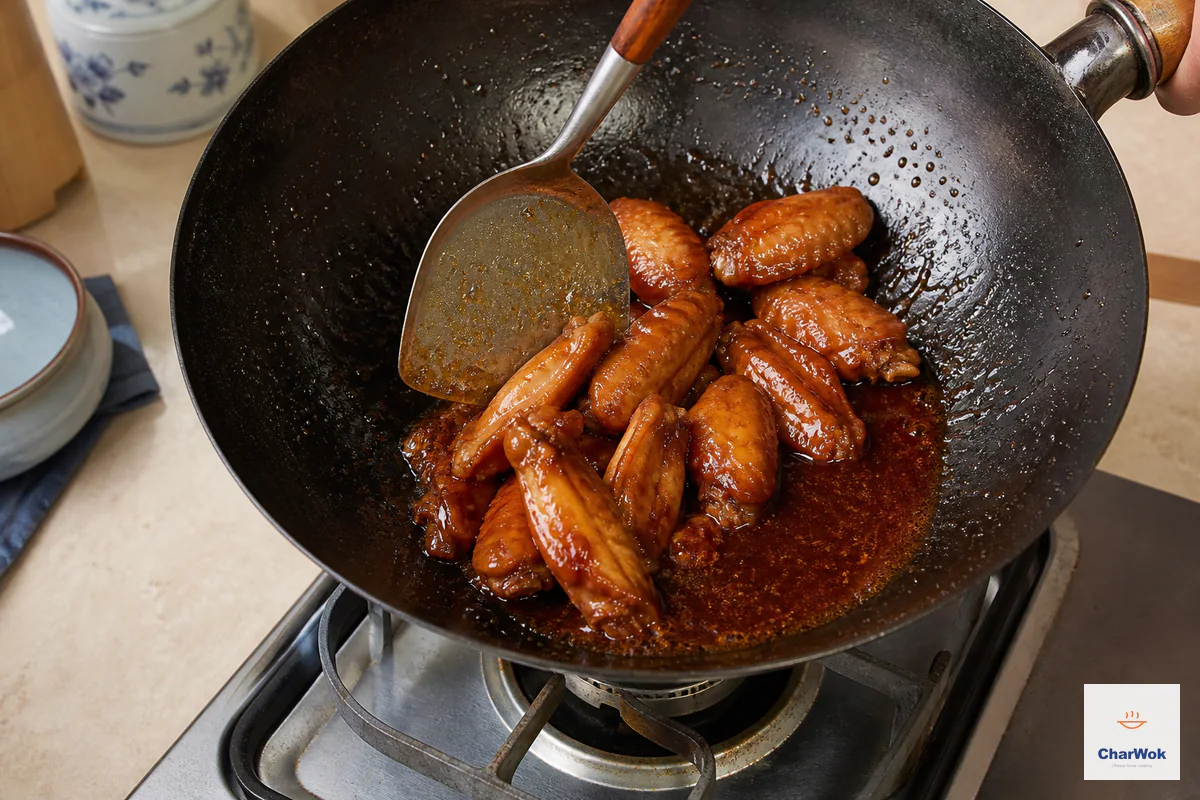
Return the cooked wings when the sauce lightly coats a spoon, toss briefly, and stop while the glaze still flows.
- Finish and serve. Tip the wings onto a platter, scrape the last sticky sauce over the top, and shower with sesame seeds and chopped scallion.
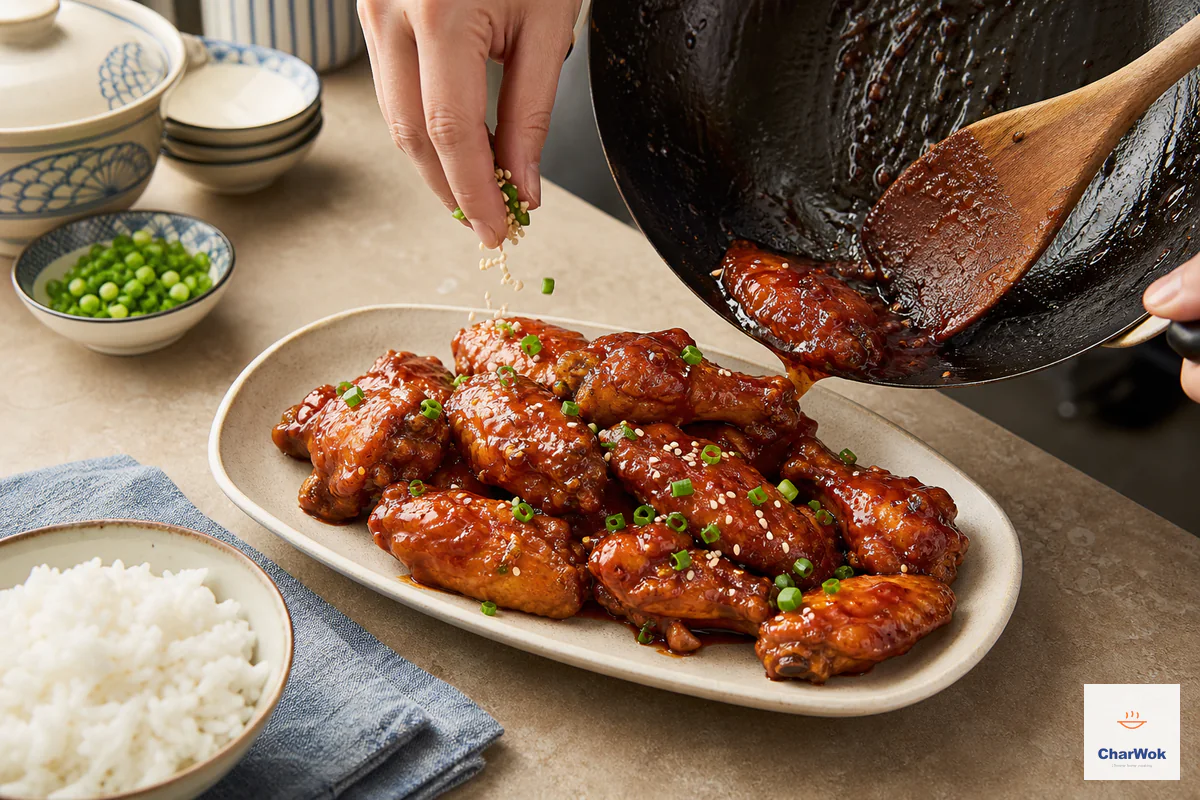
Scrape the last glaze over the plated wings, shower with toasted sesame and chopped scallion, and serve warm with rice.
When things go wrong
Most problems come from pan size, heat control, skipping the temperature check, or reducing the sweet sauce for too long.
- The sauce never thickens and you are left with soup. Almost always the braise was too gentle in step 4 and barely any water boiled off, so there is too much to reduce at the end. Next time keep that covered stage at an active boil. To rescue this batch now, fish out the solids, pour the sauce into a small saucepan, and reduce it separately on high while you hold the wings warm; then combine and toss.
- The sauce scorched and turned bitter. You went too far or too hot in step 6. Sugar burns fast and silently at the very end. The moment the bubbles slow from rapid and small to lazy and large, and the color deepens toward dark amber, you are seconds from trouble. Pull the pan off the heat by lifting it, not just turning the burner down; the metal holds enough heat to keep cooking.
- The wings are pale and the skin is flabby. You skipped or rushed the browning in step 2, or the wings were wet going in. Dry meat and patient browning are non-negotiable. Flabby skin will not improve later; the braise softens it further.
- It tastes one-dimensionally sweet. Your soy sauce may be weak, or you held back on the salt. Taste the sauce at the start of the reduction; it should read savory-sweet, not dessert-sweet. Add a splash more soy or a small pinch of salt and keep going. A few extra slices of ginger also help cut the sweetness.
- The meat is dry and stringy. The wings stayed in the pan throughout a long reduction. Once several thick pieces reach 165°F (74°C), move all the wings to a clean plate and reduce the sauce separately; return them only long enough to glaze.
Variations and what to serve alongside
A dried red chili or two can be added with the aromatics for gentle heat. A teaspoon of oyster sauce alongside the soy adds a deeper savory note. Bone-in pork ribs require a different cooking method and temperature check, so they should not be treated as a fixed-time swap for the wings.
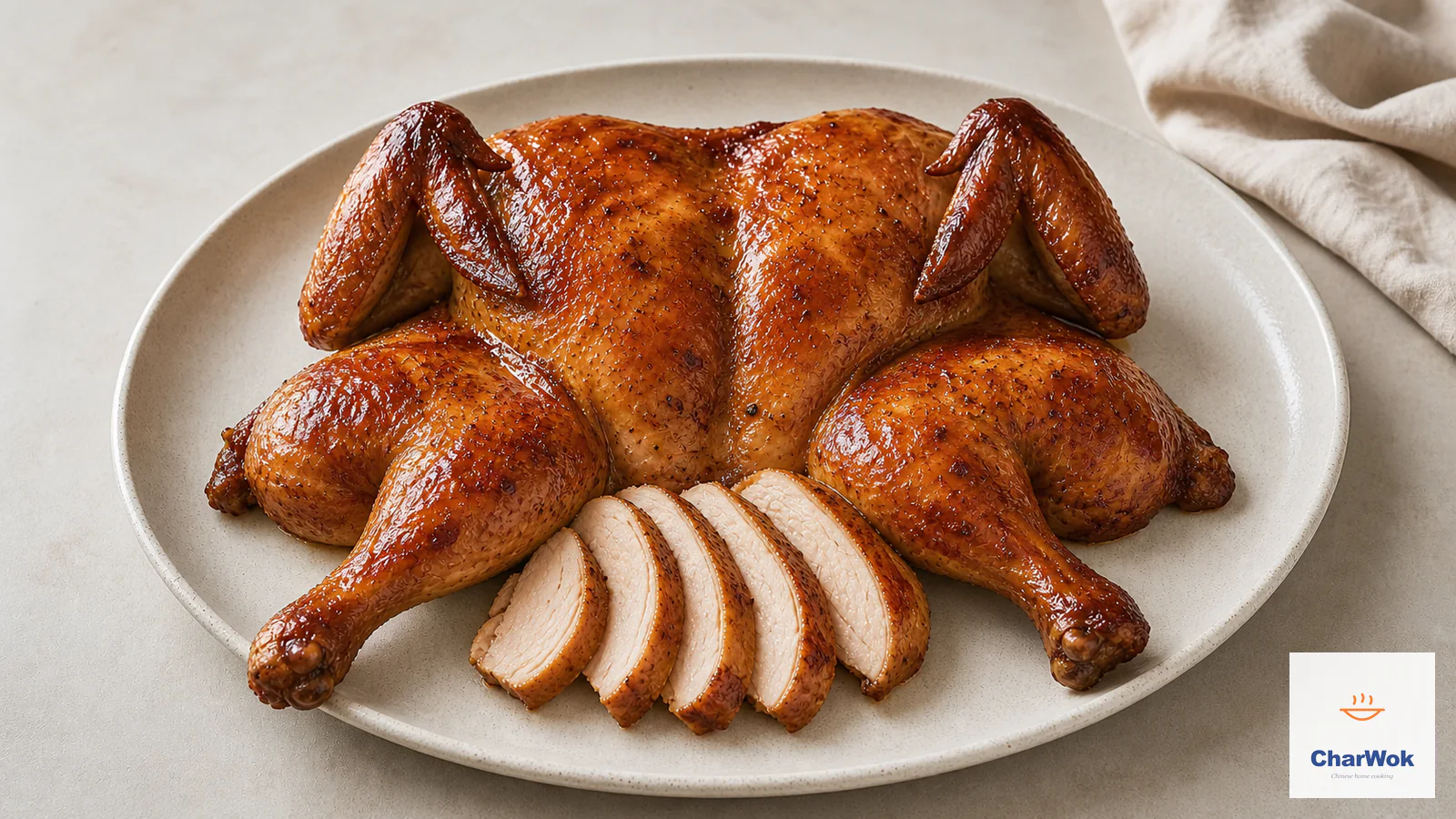
For a meal, serve over freshly cooked steamed jasmine rice with a quick vegetable on the side. The richness wants something green and plain: a fast cabbage stir-fry or garlic bok choy balances the sweet glaze better than another heavy dish. If you are building a small spread for guests, these wings sit happily next to char siu chicken or soy sauce chicken, with the cola wings playing the sticky-finger-food role.
Storage and reheating
Refrigerate the wings in shallow, covered containers within 2 hours of cooking, or within 1 hour when the room is above 90°F (32°C). Keep the refrigerator at 40°F (4°C) or below and use within 3–4 days. They may be eaten cold if they have stayed refrigerated, or reheated gently with a spoonful of water until the thickest pieces reach 165°F (74°C). Do not leave them at room temperature for more than 2 hours. See the USDA chicken storage guidance.
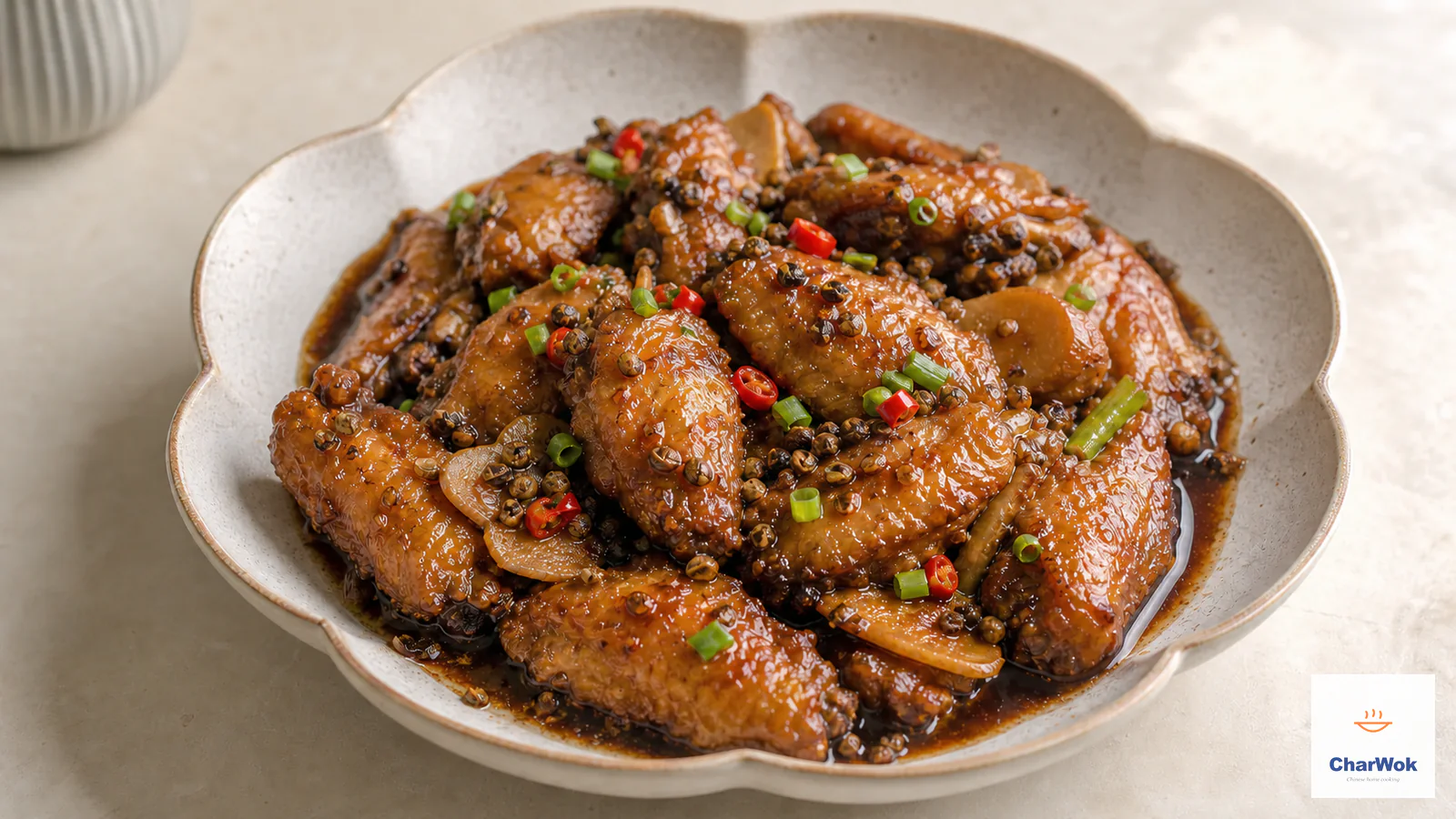
For other dishes that can be prepared ahead, see the make-ahead recipe collection. The brown-braise-reduce sequence also appears in other Chinese chicken recipes, including peppercorn braised wings; in every version, use temperature rather than sauce color or elapsed time to confirm poultry doneness.
Common questions
These answers cover substitutions, sauce reduction, temperature, and make-ahead safety.
Can I use diet cola? Not as a direct substitute. This recipe depends on the sugar in regular cola concentrating into a glaze. Zero-sugar formulas vary and do not provide that sugar; use a cola whose label lists sugar.
Do I have to cut the wings apart? It helps. Separating at the joints lets the pieces sit flat for even browning and pack tightly so the small amount of liquid covers them. Whole wings work but brown and braise less evenly.
Why did my sauce burn at the end? The sugar concentrates as water boils away, and in the final minute it scorches in seconds. Pull the pan off the heat while the sauce still looks slightly loose; it thickens as it cools.
Can I make this ahead? Yes. Refrigerate within 2 hours in shallow, covered containers and use within 3–4 days. Reheat with a splash of water until the thickest pieces reach 165°F (74°C), or serve cold directly from safe refrigeration.
How do I know the wings are safely cooked? Check several of the thickest flats and drumettes without touching bone. Every piece tested must reach 165°F (74°C); a 15-minute braise, dark glaze, or meat pulling from the bone cannot replace a thermometer.