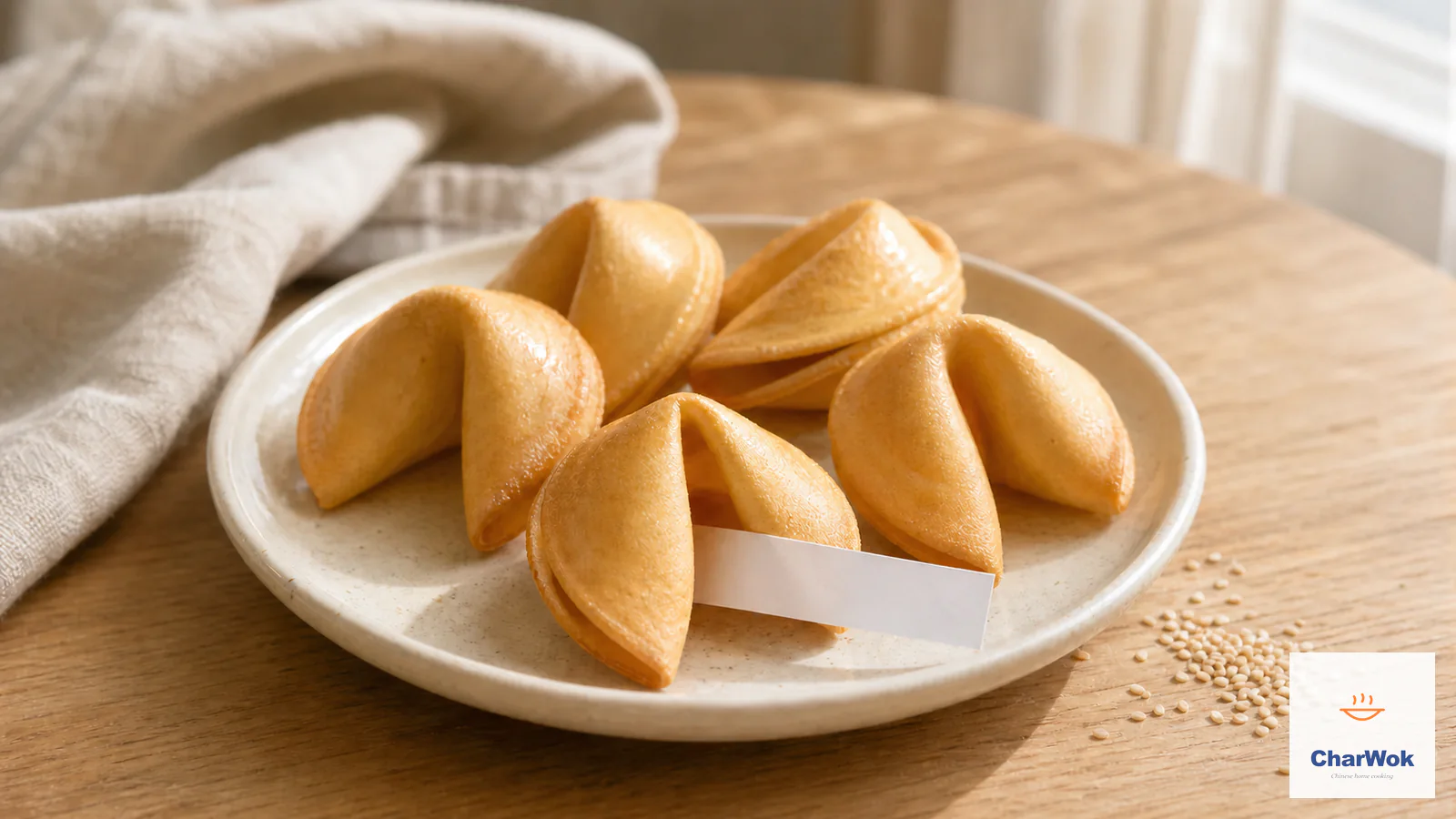
The funny thing about fortune cookies is that most people who grew up eating real Chinese food have never made them, never ordered them, and until recently had never even tasted one. They are an American invention, born in early-twentieth-century California, that traveled back east as the closing act of every takeout meal. So why bother making them at home? Because the ones in the little cellophane sleeve taste like sweet cardboard, and because a warm cookie you folded yourself, with a note you wrote yourself, is one of the cheapest wow-moments in a home kitchen.
Here is the catch that catches everyone the first time: these are not really cookies. They are thin wafers baked pliable, then forced into a shape while they are still hot enough to burn your fingertips. Each disc gives you roughly half a minute between "too soft to hold a crease" and "so brittle it snaps when you fold it," which is why the whole batch is built around baking only four at a time. Once you accept that, the rest is easy. I will not pretend the shaping is relaxing. It is a small, frantic, deeply satisfying juggling act, and the batch below is sized so you can practice without committing your whole evening.
At a glance. A pourable egg-white batter, baked four discs at a time at 180°C / 355°F for about 7 minutes, then folded over a paper note and pressed across a mug rim. Roughly 18 cookies, 54 kcal each. The one decision that matters: pull them the moment the wafer's surface turns from glossy-wet to matte, because they stiffen every second after that.
What these actually are (and are not)
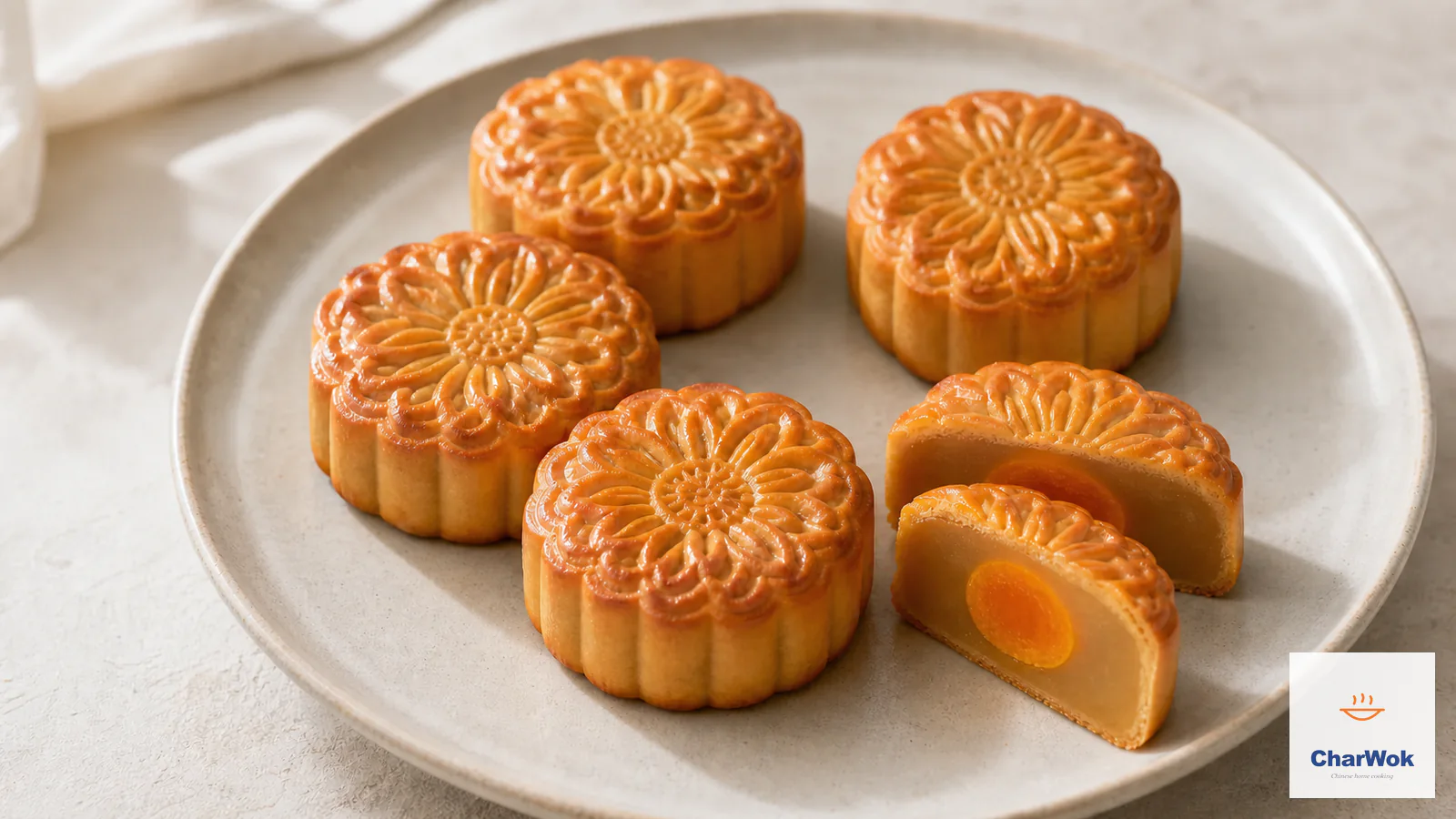
Unlike Cantonese mooncakes or tang yuan, which carry centuries of Mid-Autumn and Lantern Festival meaning, the fortune cookie has no deep Chinese lineage. Food historians trace it to Japanese-American bakeries in Los Angeles and San Francisco before World War II, after which Chinese-American restaurants adopted and mass-produced it. So if you serve these to a visiting relative from Beijing, expect a puzzled look. Serve them to a kid at a birthday table, and you have a fan for life.
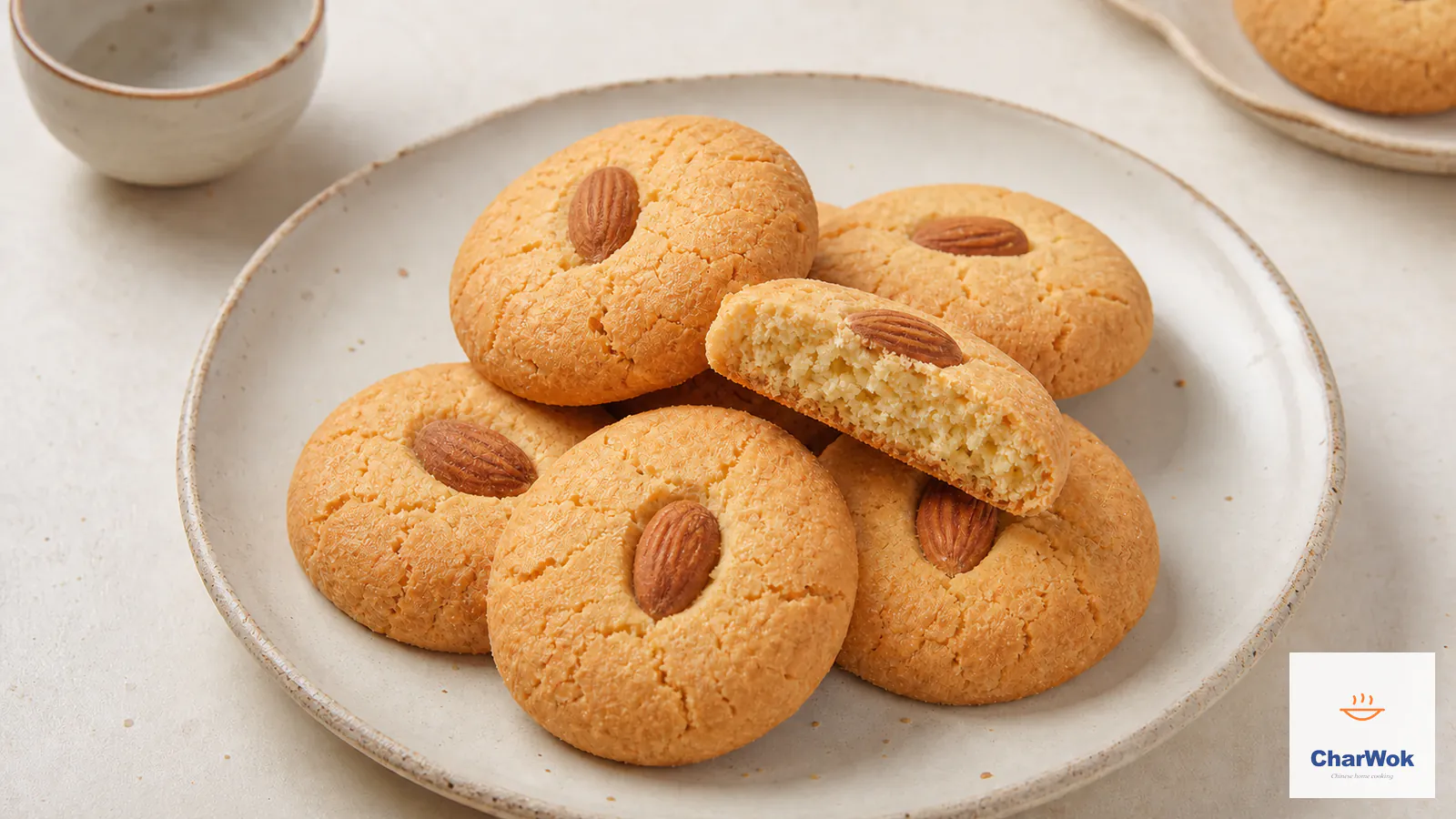
What makes the homemade version worth the trouble is texture. A commercial fortune cookie is dry and one-note. A fresh one is shatter-crisp at the points, faintly chewy for a heartbeat at the center, and fragrant with whatever you chose to flavor it. They belong on the same festive dessert tray as almond cookies or a plate of sesame balls, and they vanish just as fast.
The science you need before you start
Three things are doing work in this batter, and understanding them saves you from the two failure modes everyone hits.
Egg white is the structure, not a binder. There is no yolk, no leavening, almost no flour. The protein in the white sets in the oven into a brittle film, which is why a fortune cookie snaps instead of crumbling like a shortbread. The butter is there for flavor and to keep the wafer flexible for those few seconds of folding; the water thins the batter so it spreads into a disc under its own weight.
Gluten is the enemy. This is the part the source recipes gloss over. There is only 80 g of flour in the whole batch, but all-purpose flour still has enough glutenin and gliadin to ruin you if you whip the batter like a cake. The moment those proteins hydrate and you agitate them, they form elastic strands. The result: a batter that fights back when you try to spread it thin, and a baked wafer that bends instead of crisps. Fold the flour in by hand, count to about ten, and stop the instant no dry streaks remain. Lumps the size of a sesame seed are fine. Smoothness is not the goal.
The shaping window is a glass-transition problem. Sugar and egg protein, once heated past their setting point and then cooled slightly, pass through a rubbery state before turning brittle. That rubbery state is your folding window, and it is narrow. This is why you bake in small batches: four discs is the most one pair of hands can fold before the first one goes rigid.
Ingredients
Ingredients at a glance
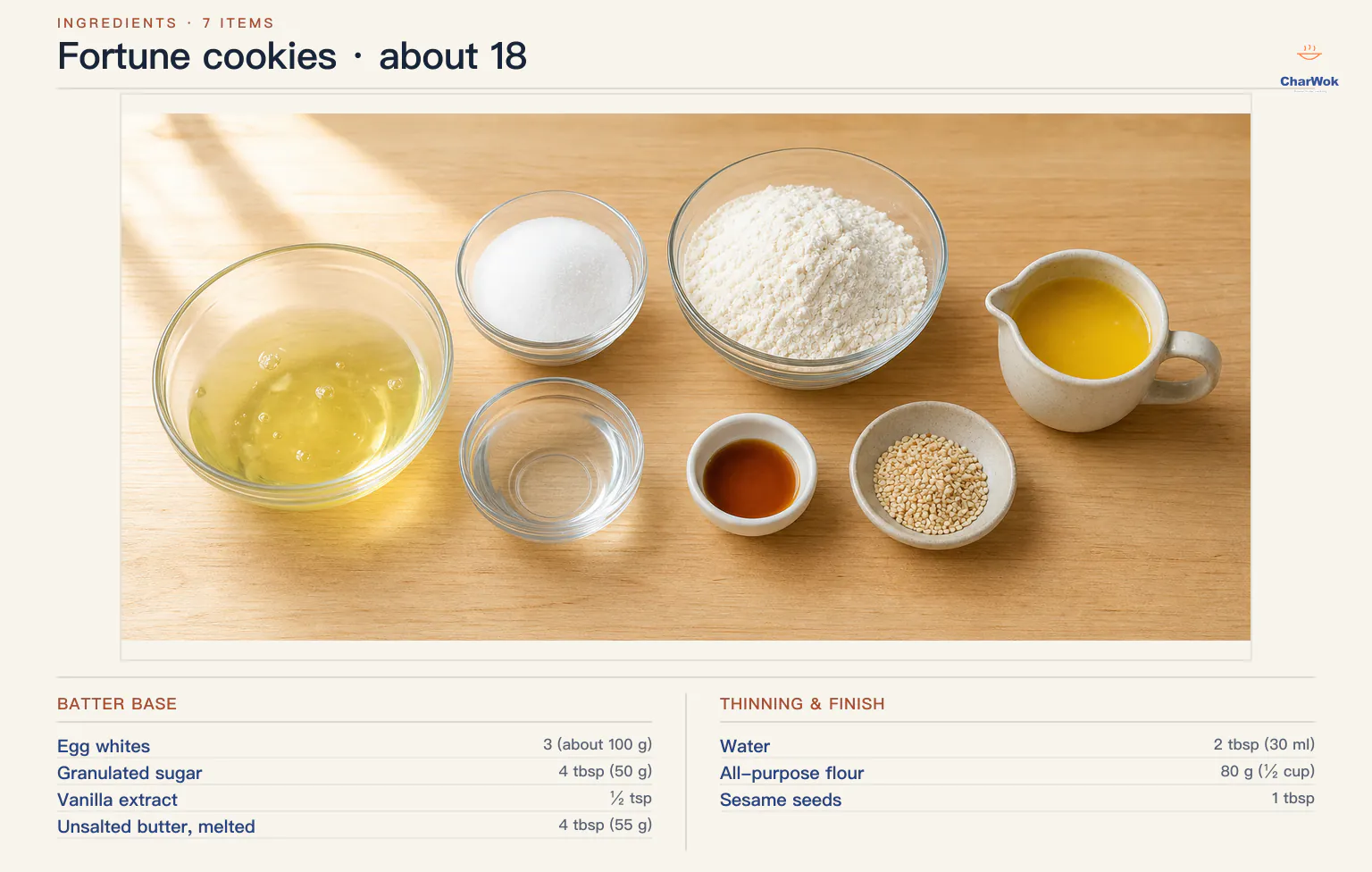
| Ingredient | Amount | Notes / substitute |
|---|---|---|
| Egg whites | 3 (about 100 g) | From large eggs. Don't bother getting them perfectly separated; a trace of yolk won't sink this recipe the way it would a meringue. |
| Granulated sugar | 4 tbsp (50 g) | Adjust down to 3 tbsp if you are dipping the finished cookies in chocolate. Superfine dissolves faster; regular is fine. |
| Vanilla extract | ½ tsp | Vanilla is the neutral default; swap it for any of the flavorings in the variations section, added at the same stage. |
| Unsalted butter, melted | 4 tbsp (55 g) | Neutral vegetable oil works but gives a flatter flavor. Melted, cooled to warm, not hot. |
| Water | 2 tbsp (30 ml) | Plain tap water. Add an extra ½ tsp only if the batter is visibly too thick to spread. |
| All-purpose flour | 80 g (½ cup) | Weigh it. Spooned-and-leveled cups run heavy and you will get chewy centers. |
| Sesame seeds | 1 tbsp | Toasted white sesame for the rim. Optional but recommended; they carry the toasted-sesame aroma that makes the cookie smell like food instead of sugar. |
Equipment that has to be on the counter before the oven opens: a heavy baking sheet lined with a silicone mat or parchment (non-negotiable, the wafers will weld themselves to bare metal), a thin metal spatula, a wide mug or glass with a rim about 8 cm across, and a muffin tin. The muffin tin is the trick I will defend to the end: dropping each folded cookie into a cup holds the shape while it cools and crisps, so you do not have to.
Making the batter
Get the fortunes out of the way first, while your hands are clean and dry, and before the oven demands your full attention. Cut paper into strips roughly 6 cm by 1 cm and write in pencil or ballpoint, never felt-tip, the ink runs in the oven's heat. Keep each message to a single line; a paragraph reads as a letter and makes the fold lumpy.
- Preheat to 180°C / 355°F (fan 170°C / 340°F). Put a rack in the middle slot. A hot, fully preheated oven is the difference between a 7-minute bake and a 12-minute bake that dries the cookies out before they brown.
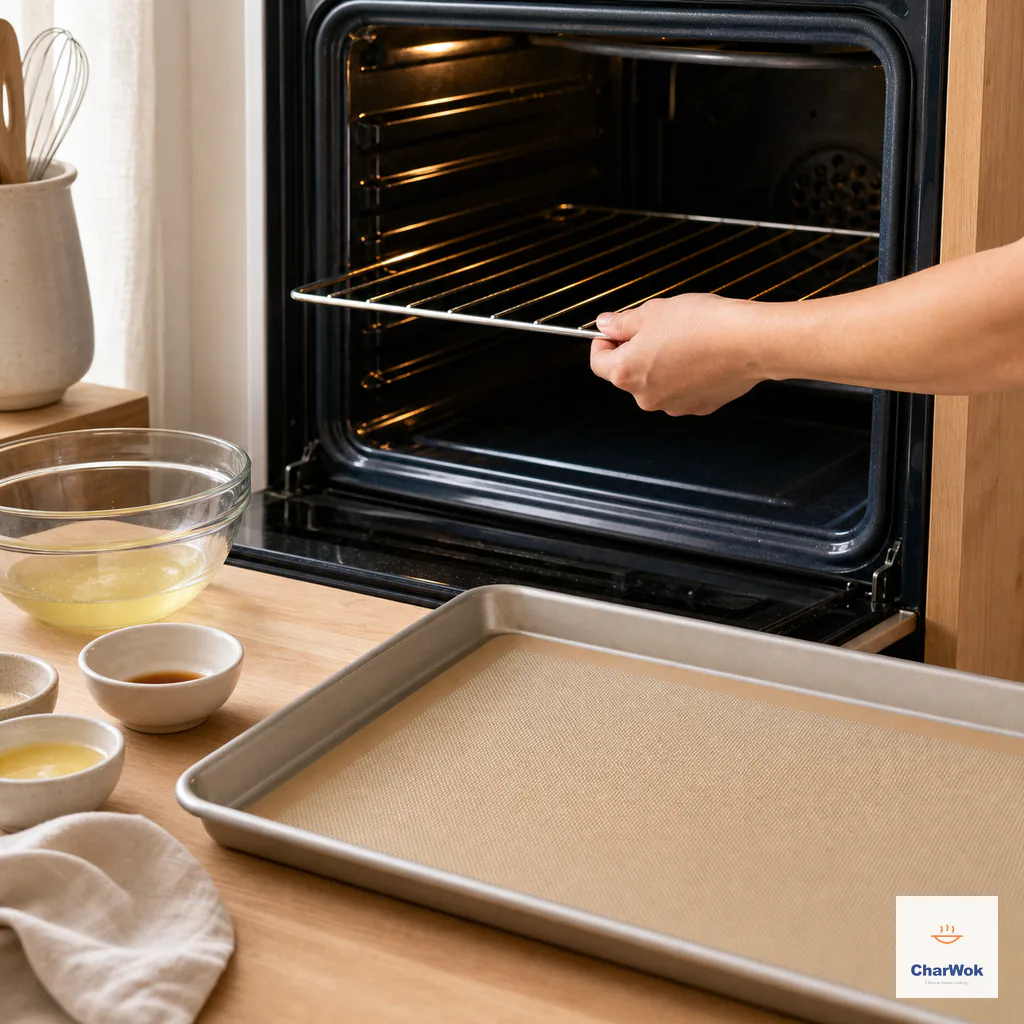
Fully preheat the oven with the rack centered and the lined baking sheet ready.
- Whisk whites and sugar until foamy, not fluffy. You are looking for a cloudy, loose foam, the stage well before soft peaks. Over-whipping introduces air bubbles that pit the surface of the baked wafer. A balloon whisk and thirty seconds by hand is all this takes.
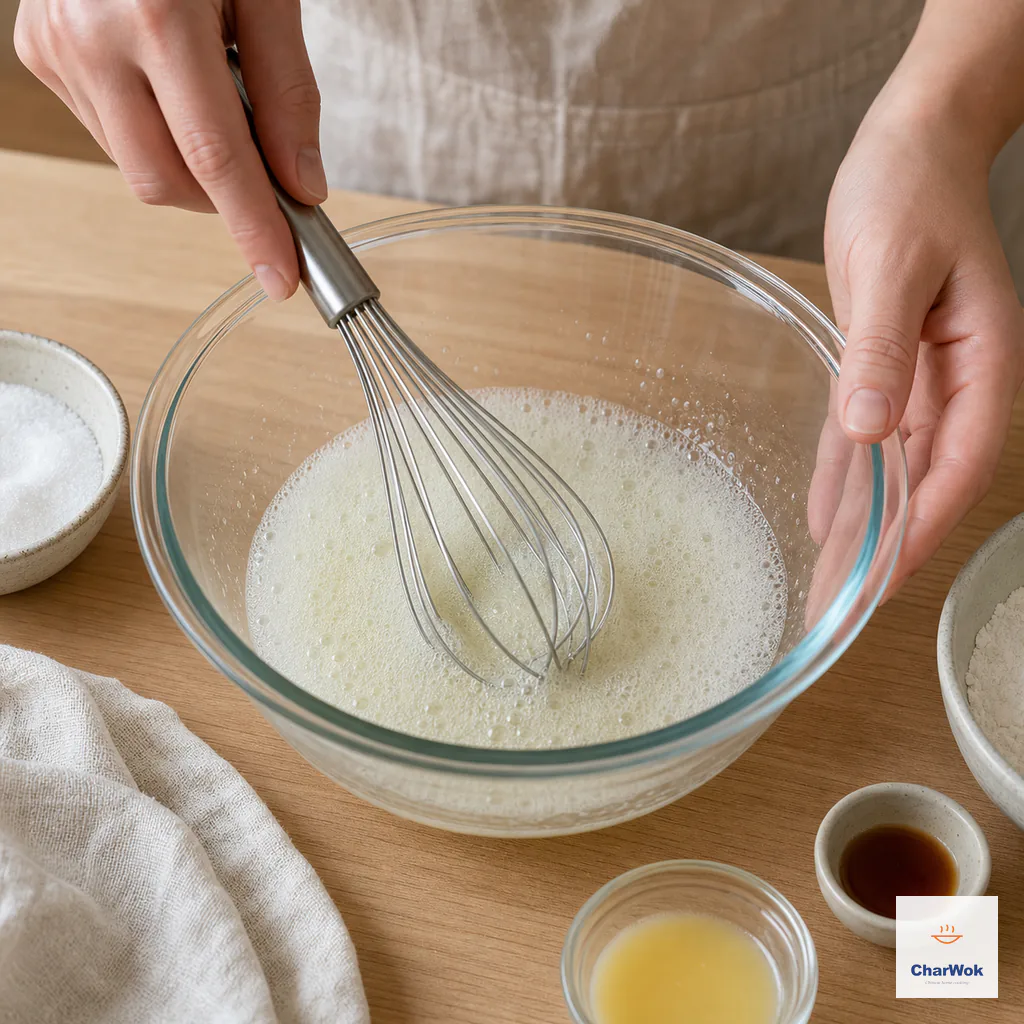
Whisk only until foamy and pourable; fluffy peaks would trap bubbles that pit the wafers.
- Add vanilla, melted butter, and water. Whisk to combine. The batter will look broken and greasy for a few seconds, then come together into a thin, pourable liquid.
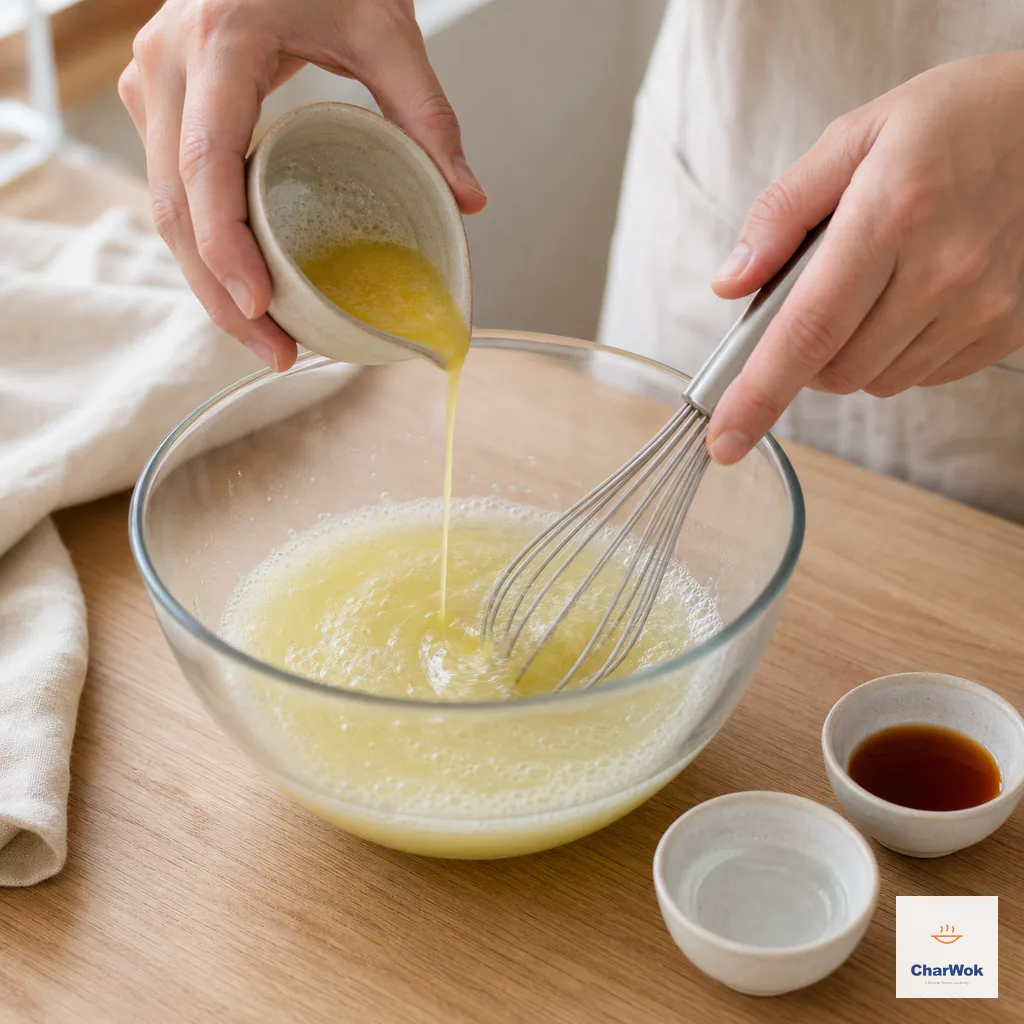
Whisk in vanilla, warm melted butter and water until the thin liquid comes together.
- Fold in the flour by hand, and stop early. Sift the flour in if you like, then stir gently with the whisk or a spatula until no dry pockets remain. The moment it looks like batter, stop. Remember the gluten rule: every extra stroke is a stroke against crispness. Rest the batter five minutes so the last tiny lumps hydrate on their own.
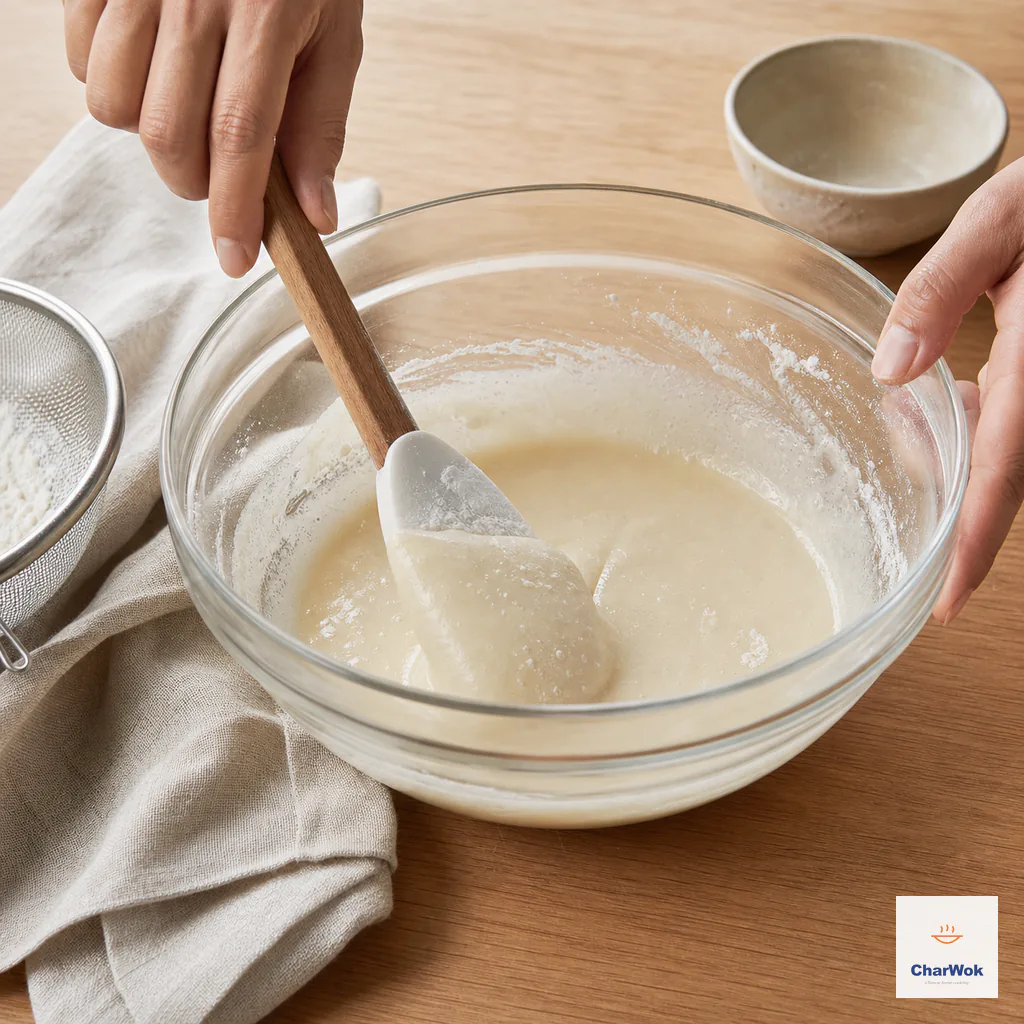
Stop as soon as the dry pockets disappear, then rest briefly instead of developing gluten.
Baking and folding, one batch at a time
- Spread four discs, no more. Drop a tablespoon of batter per cookie onto the lined sheet and use the back of the spoon to draw it out into a circle about 10 cm across. Aim for the thickness of a crepe, not a pancake. Scatter sesame seeds around the rim; they toast in the oven and concentrate the aroma at the points, which is where your teeth land first.
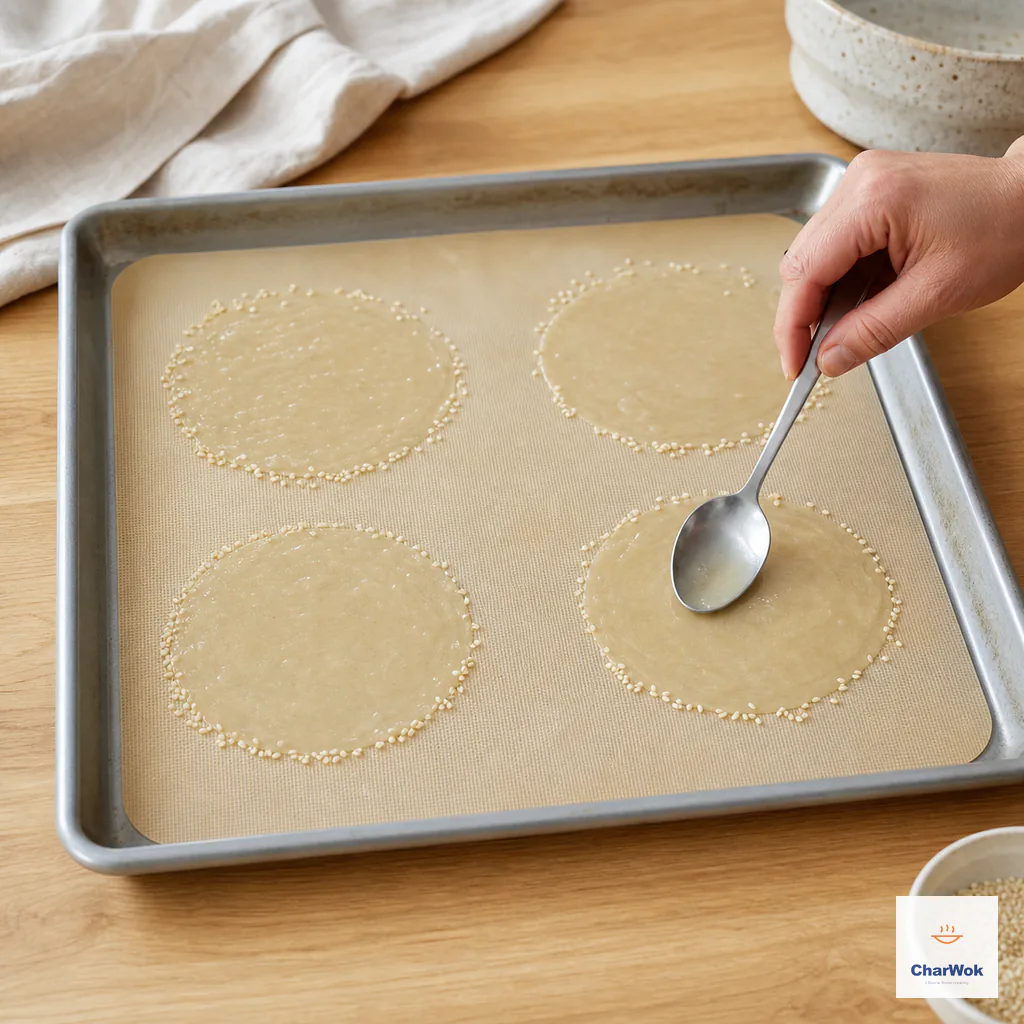
Spread only four palm-width crepe-thin discs and keep every circle separate.
- Bake 7 to 8 minutes, watching the surface. The sheen disappears first; then the rim dries out and takes on the faintest toast color. That matte, set-looking wafer is your cue to pull the sheet. Going past it in pursuit of a deeper color bakes the brittleness in early, and the discs will split when you crease them.
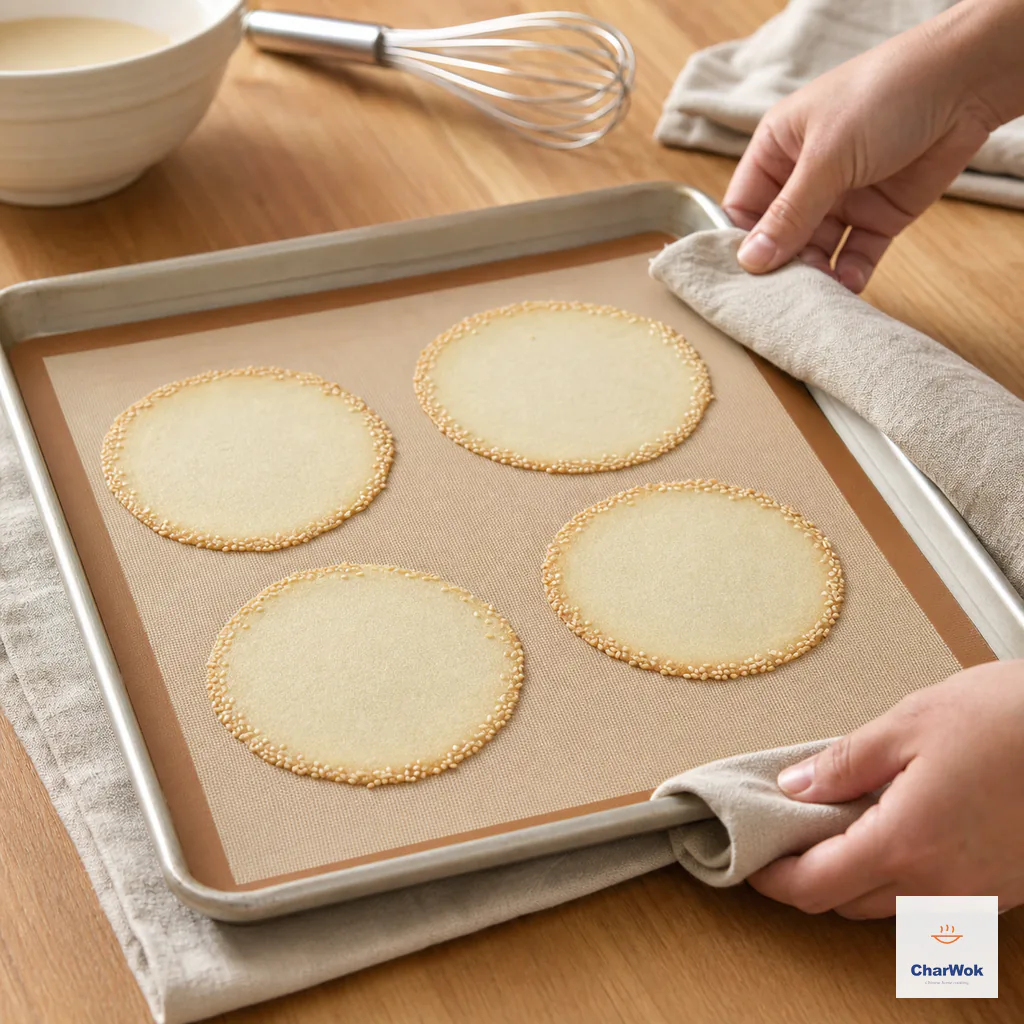
Pull the sheet when the wet sheen disappears and the very edge turns faintly golden.
- Work fast, one cookie at a time, leaving the others on the warm sheet. The residual heat of the sheet keeps the remaining discs pliable for an extra few seconds. Slide the spatula under one disc, flip it over so the smooth side faces up, and lay a fortune strip across the center.
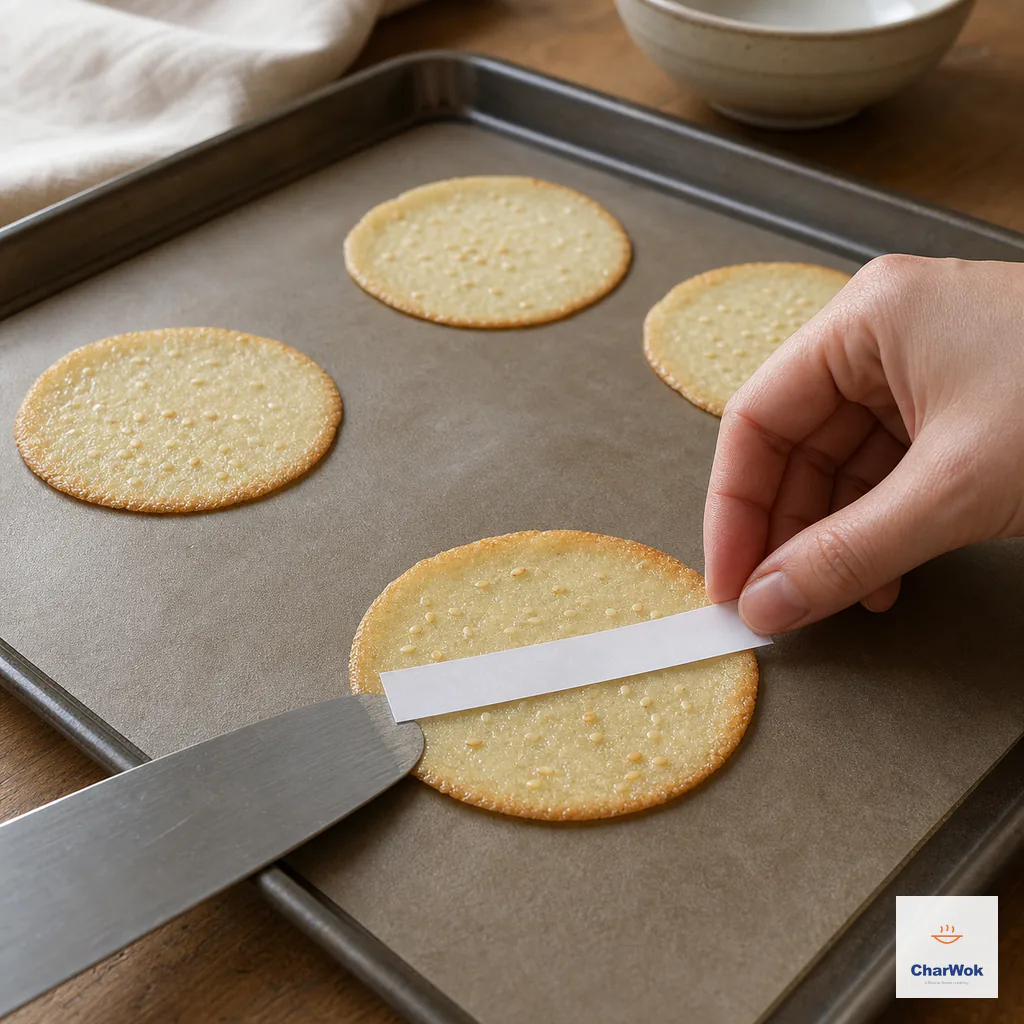
Leave the other discs on the warm sheet while you flip one and center its paper fortune.
- Crease it, then bend it backward over the rim of the mug. Bring the two halves together into a half-circle with the smooth side facing out, lay the spine of the fold across the top of the mug, and let the rounded sides drop down on opposite sides. With one finger on the crease, push the two lobes gently toward each other so the center lifts. That counter-bend, fold one way then arch the other, is what gives the cookie its signature kink rather than a flat taco shape.
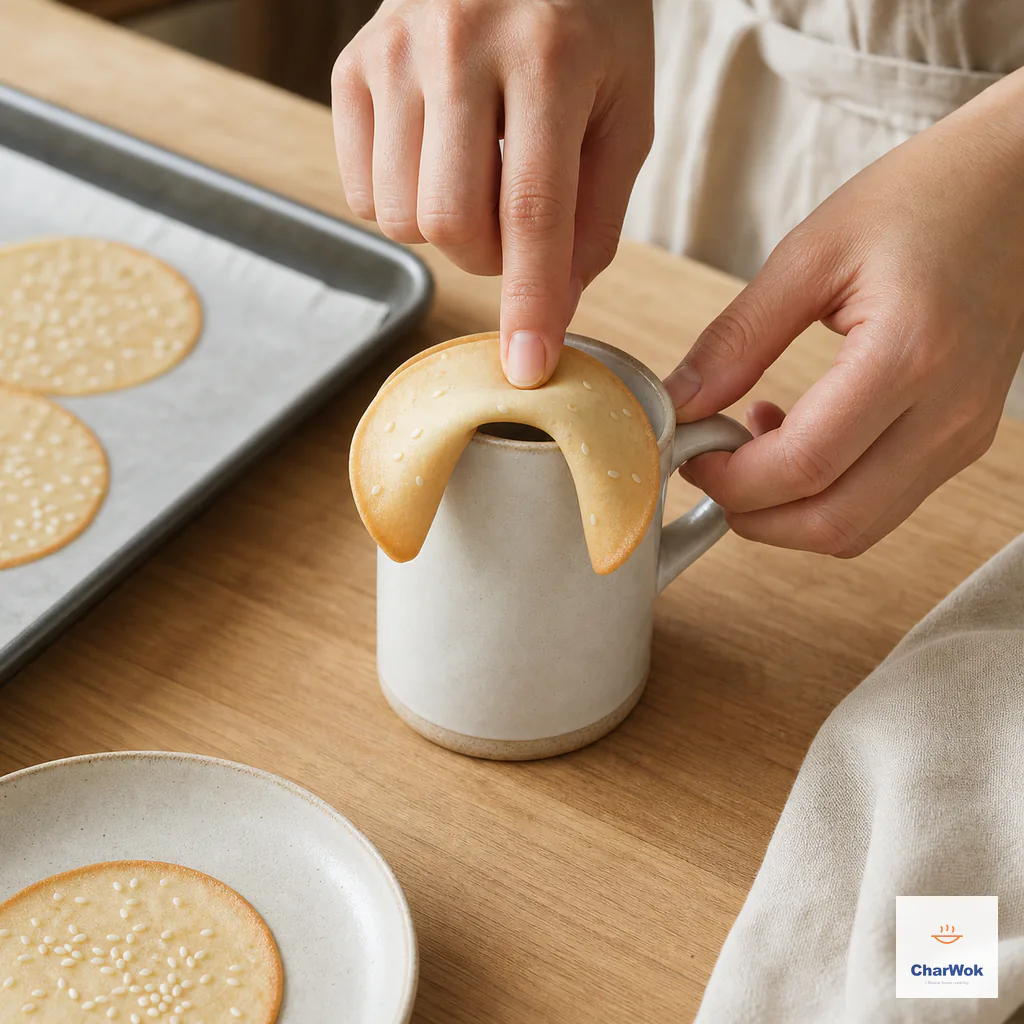
Fold into a semicircle, set its straight spine on the mug rim and lower the lobes on opposite sides.
- Move each finished cookie into a cup of the muffin tin while it is still warm. The walls of the cup brace the lobes and lock the curve in place as the wafer cools and hardens, so nothing relaxes back open. Repeat with the next disc. If a disc on the sheet has gone too stiff to fold cleanly, slide the whole sheet back into the oven for 15 seconds to soften it.
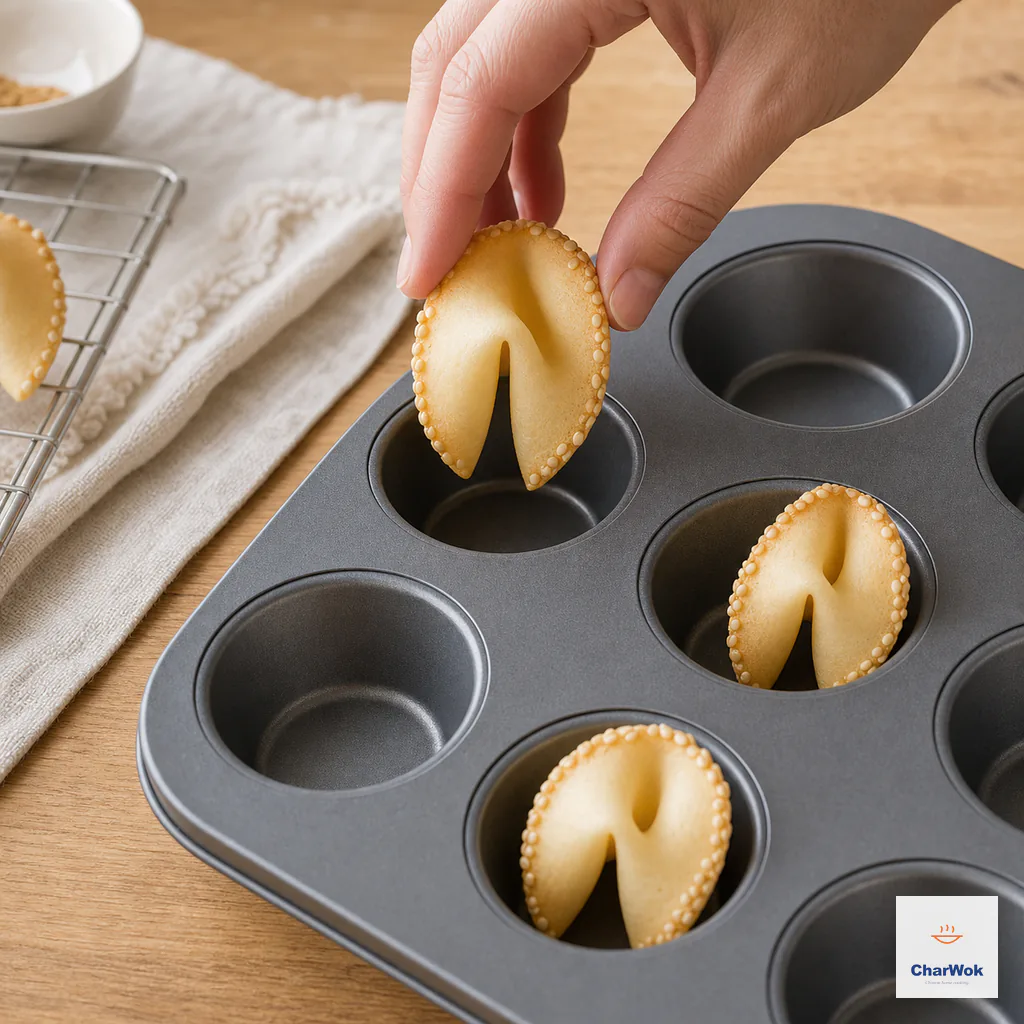
Brace every warm cookie in its own cup until the wafer cools completely and turns crisp.
- Bake the next batch. Wipe the silicone mat between batches if any seeds stuck; stray seeds scorch and taste bitter on round two.
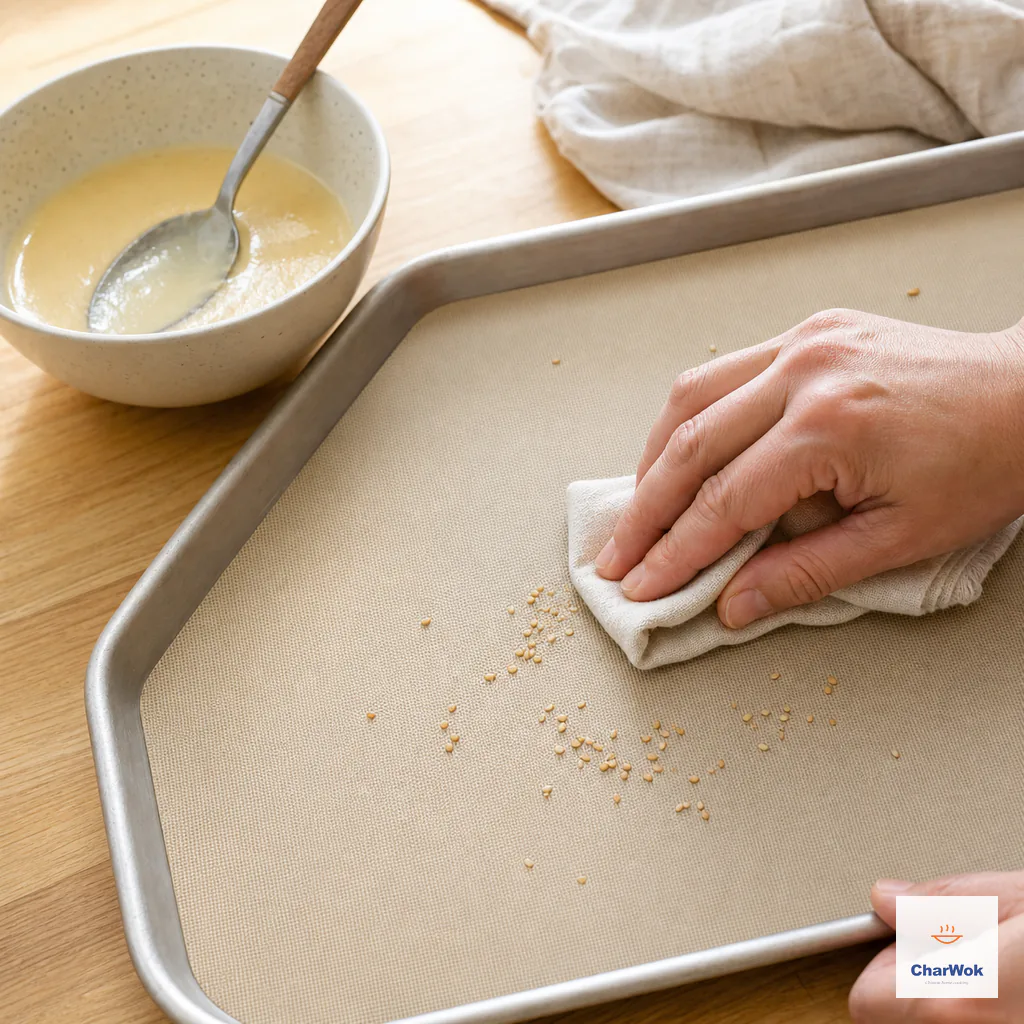
Clear away loose seeds, then repeat with no more than four discs while the sheet stays warm.
Expect your first two cookies of the day to be ugly. Mine always are. The third onwards, your hands find the rhythm. By the end of the batch you will be folding without thinking, and the muffin tin will be full of neat golden crescents.
When things go wrong
| Symptom | Cause | Fix |
|---|---|---|
| Cookie tears or won't fold, snaps instead | Overbaked; left on the sheet too long before folding | Pull 30–60 seconds earlier next time. Rescue a stiff sheet by returning it to the oven for 15 seconds to re-soften. |
| Cookie collapses, won't hold the crease | Underbaked, or batter spread too thick | Bake another minute. Spread the next discs thinner; a 10 cm circle should be nearly translucent at the edge. |
| Chewy, leather-like centers after cooling | Batter too thick from over-measured flour, or not baked out | Weigh the flour at 80 g. Re-crisp finished cookies at 130°C / 260°F for 6 minutes (see storage). |
| Batter resists spreading into a circle | Over-mixed flour developed gluten | Stop mixing the moment it comes together. A 5-minute rest relaxes the gluten noticeably. |
| Cookies stick to the sheet | Bare metal or a worn nonstick coating | Use a silicone mat or fresh parchment every time. There is enough butter in the recipe that a good liner releases cleanly. |
| Surface pitted with small holes | Over-whipped egg whites trapped air | Whisk only to foamy, not frothy. Let the batter rest so bubbles rise and pop. |
The honest limitation: even done well, these are delicate for only the first day. They are a make-and-eat-today project, or a make-and-store-airtight project you re-crisp before serving. They are not a cookie-jar cookie. Plan around that and you will not be disappointed.
Flavor variations worth the experiment
The batter is a blank canvas. Replace the vanilla with any of these, added at the same stage:
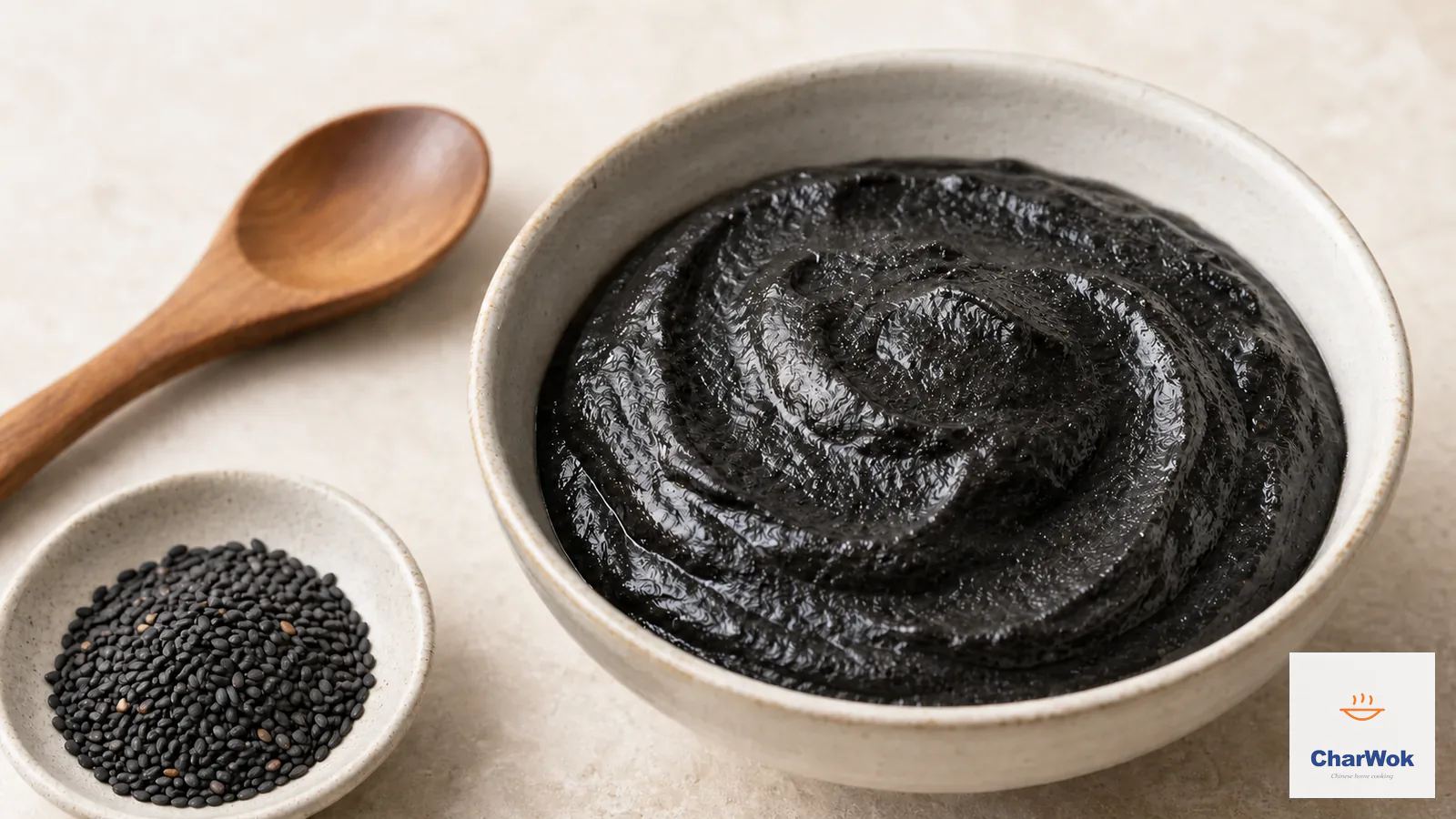
- Black sesame paste, 1 tsp. My default. It deepens the toasted-sesame character of the rim and turns the wafer a warm beige. Stir it in with the butter so it disperses rather than clumping. This is the version I make for Chinese New Year alongside nian gao and eight treasure rice.
- Toasted-sesame oil, ¼ tsp, plus a pinch of fine salt. A savory-leaning wafer that reads more like a snack than a sweet. The salt sharpens the sesame; keep the measure small, the oil is assertive.
- Earl Grey tea, 1 tsp ground fine. Grind the leaves in a spice mill to a powder and sift them in with the flour. Bergamot and a slight tannin edge pair cleanly with the butter. Lovely with a glass of homemade bubble tea.
- Pandan extract, ½ tsp. A Southeast-Asian floral note with a grassy, vanilla-adjacent aroma. It tints the wafer a soft green and is the most asked-about version whenever I serve it.
For decoration beyond the sesame rim, brush the warm rim with a little honey and press it into a mix of black and white sesame seeds, or dust the cooled cookies with green tea powder for a speckled finish. A pinch of crushed freeze-dried raspberry gives a tart-sweet edge and a pink blush that photographs well. Keep these finishes light; the wafer is thin and a heavy coating turns it into something else entirely, closer to the glossy shell of snow skin mooncakes.
Pairings and when to serve them
Fortune cookies close a meal rather than anchor it. Serve a basket of them after a dim-sum-style spread that might include steamed custard buns or red bean buns, and let guests crack theirs open for the note. The fun is in the message, so I write my own: dinner-table dares for a friend's send-off, a single clue per cookie when I am staging a scavenger hunt for my nieces, or trivia questions where the answer to one is hidden inside the next cookie. A small bowl of peanut sesame brittle next to the basket gives anyone who cracks theirs open too eagerly something else to crunch on.
If you want a single resource for building a dessert table around them, the festive-season recipe collection and the broader Chinese New Year round-up are good starting points. For a savory counterweight on the same menu, a light pinch of five-spice powder in a cookie would be too odd, but it belongs in the main dishes you serve beforehand.
Storage and bringing back the crunch
Cool the cookies fully before storing, or the trapped steam turns them soft within hours. Layer them between sheets of parchment in an airtight tin and keep them at room temperature for up to a week. Do not refrigerate; the humidity in a fridge is the enemy of anything crisp.
When they lose their snap, and they will, a short trip back through a gentle oven restores them. Warm the oven to 130°C / 260°F (set the fan to 120°C / 250°F), spread the cookies out, and give them about 6 minutes. The point of keeping the heat low is to drive off the moisture they have picked up without cooking them any further, which keeps the color where it is. Leave them on the sheet to cool; the last of the crispness arrives as they come down to room temperature, not while they are still warm.
Frequently asked questions
Can I make the batter ahead? Yes, up to 24 hours, covered and refrigerated. Whisk it briefly before using, since the flour settles. Baked, unshaped discs cannot be held; they harden in minutes.
Why only four cookies per batch? Each disc stays foldable for about 30 seconds out of the oven. Four is the realistic limit for one person before the first one sets. A second pair of hands doubles that, but keep it to eight at most.
Do I need a special mold? No. A mug rim creates the fold, and a muffin tin holds the shape while it cools. Commercial fortune-cookie molds exist but are unnecessary for home batches.
Are these authentic Chinese? No. They are a twentieth-century American invention adopted by Chinese-American restaurants. They are fun to make and eat, but they are not traditional, the way glutinous rice balls or mooncakes are.
Can I make them gluten-free? Replace the all-purpose flour with a 1-to-1 gluten-free blend that includes a starch. The wafer will be slightly more fragile when shaping, so fold gently and lean on the muffin tin.