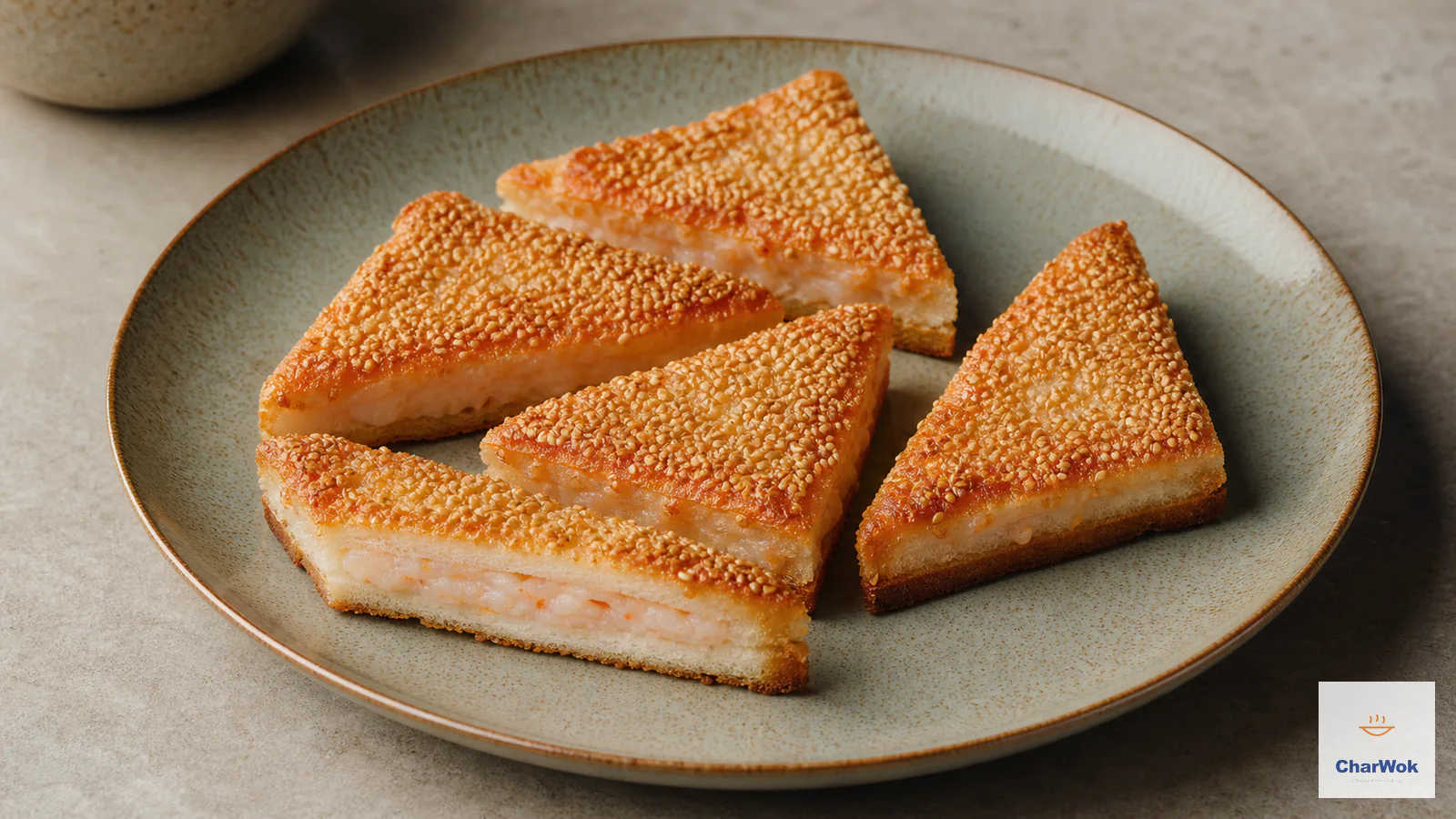
Shrimp toast pairs a crisp sesame-coated bread base with a seasoned shrimp-and-egg-white paste. The paste must adhere to the bread, cook evenly and reach 160°F / 71°C at the centre; golden sesame seeds alone cannot confirm that the raw filling is safe.
Blotting the shrimp dry, spreading an even layer and leaving space between pieces prevent most texture problems. The pan-fried and air-fried methods below use the same measured filling endpoint, even though their browning and cooking times differ.
At a glance. Blot 225 g / ½ lb raw shrimp dry, process it with one egg white until cohesive, and spread it evenly over six slices of bread. Keep the raw paste at 40°F / 4°C or below. For either method, remove 2 to 3 of the largest pieces from different cooking positions and insert a thin thermometer sideways into the filling; every sample must reach 160°F / 71°C.
What shrimp toast is
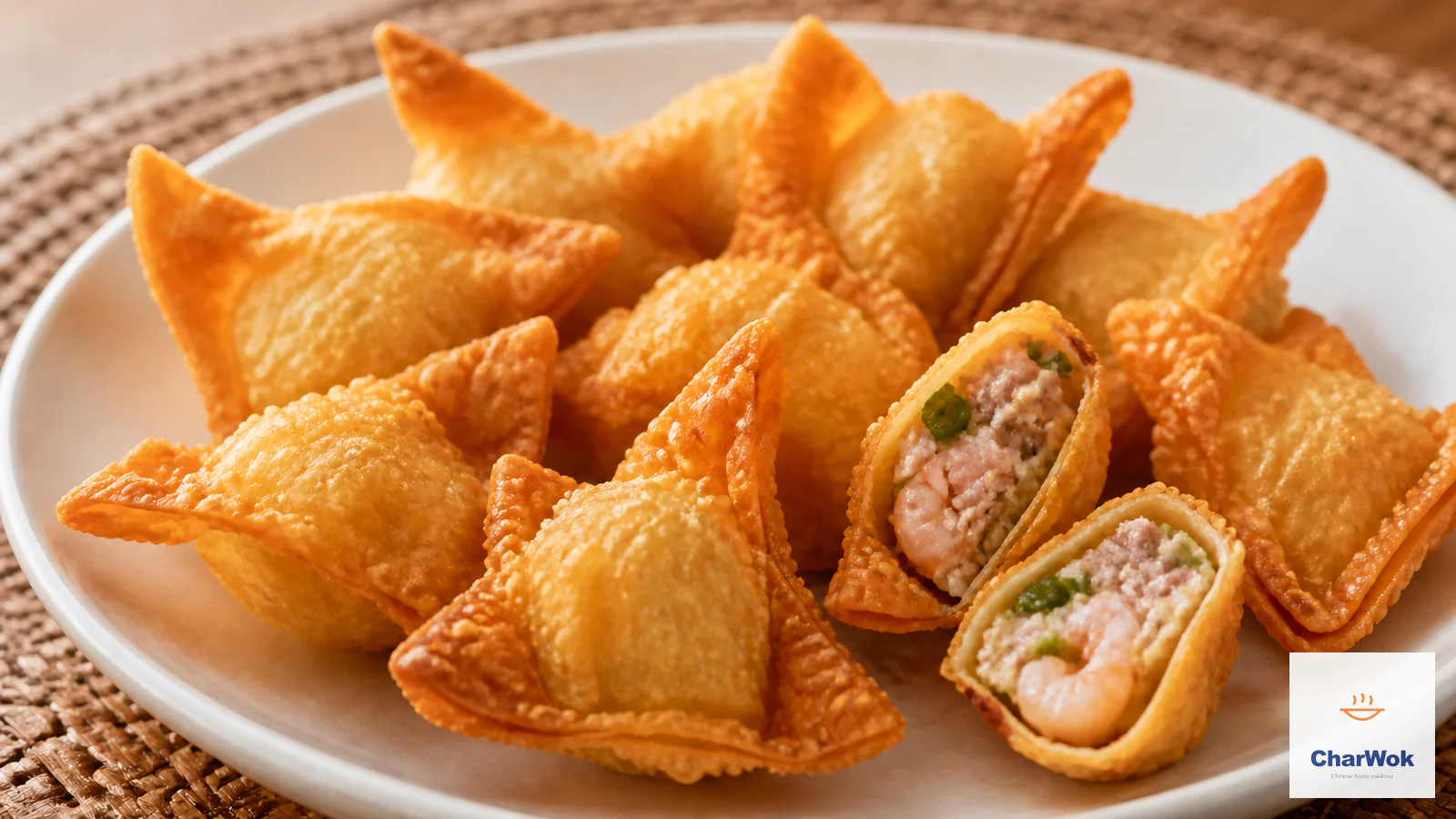
Shrimp toast, often called sesame prawn toast, is bread topped with seasoned shrimp paste and sesame seeds, then fried or air-fried. It appears on Cantonese-style appetizer and dim sum menus, alongside dishes such as fried wontons and har gow.
The method resembles other shrimp-paste preparations: salt and mixing make the filling cohesive enough to cling to the bread. The filling in pork-and-shrimp siu mai uses a related mixing principle, although the ingredients and cooking method differ.
Why the paste has to be sticky, not just smooth
Processing the shrimp, egg white and seasonings only until they look even can leave a loose puree that slides off the bread. The useful endpoint is a cohesive paste, not merely a smooth one.
Salt and mixing help the shrimp proteins form a cohesive paste. Stop when the mixture clings to the blade or spatula and pulls into a short strand instead of dripping. A loose paste may slide from the bread; excessive processing can make the cooked filling dense.
Ingredients
Ingredients at a glance
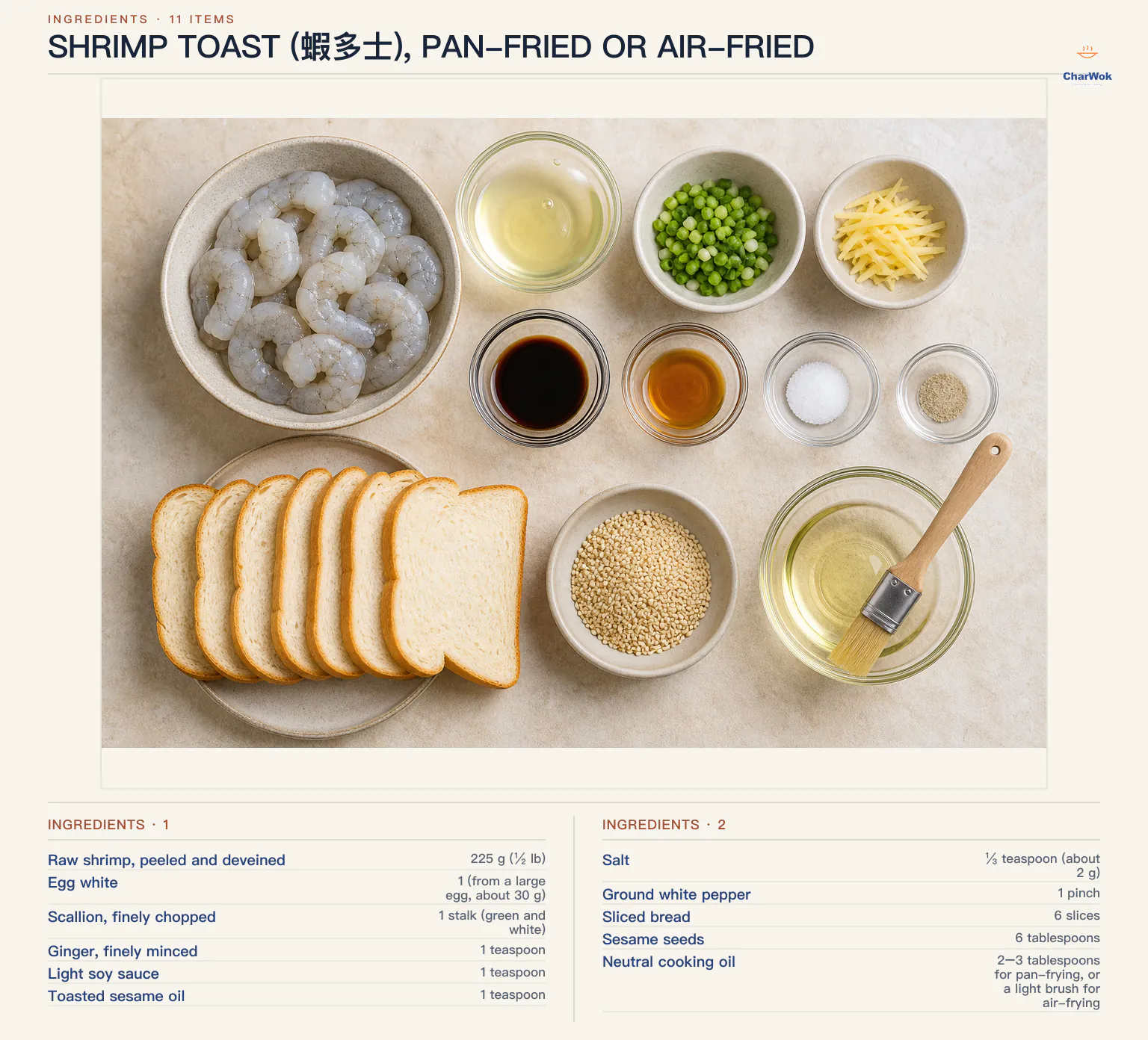
Quantities below cover six slices of toast, cut into four triangles each: about 24 pieces or four snack-sized servings. Use raw shrimp and keep it cold while preparing the paste. Egg white helps bind the mixture; light soy sauce seasons it without the darker colour of dark soy, and toasted sesame oil adds aroma.
| Ingredient | Amount | Notes / substitute |
|---|---|---|
| Raw shrimp, peeled and deveined | 225 g (½ lb) | Medium shrimp or prawns both work. Thaw frozen shrimp in the refrigerator and blot dry. |
| Egg white | 1 (from a large egg, about 30 g) | Helps bind the paste. This raw egg ingredient is why the finished filling uses a 160°F / 71°C endpoint. |
| Scallion, finely chopped | 1 stalk (green and white) | Chives can replace it. |
| Ginger, finely minced | 1 teaspoon | Grate it for a finer texture. |
| Light soy sauce | 1 teaspoon | Dark soy changes the colour and flavour. |
| Toasted sesame oil | 1 teaspoon | Use as a seasoning, not as the frying oil. |
| Salt | ⅓ teaspoon (about 2 g) | Mix it into the paste; do not taste the raw mixture. |
| Ground white pepper | 1 pinch | Black pepper is safe to use but tastes different. |
| Sliced bread | 6 slices | A close, even crumb supports the paste better than bread with large holes. |
| Sesame seeds | 6 tablespoons | Raw seeds are easier to brown without scorching. |
| Neutral cooking oil | 2–3 tablespoons for pan-frying, or a light brush for air-frying | Choose an oil whose label supports the selected cooking temperature. |
The method, step by step
Build the paste, assemble the toast, then choose pan-frying or air-frying. The first-check time varies by appliance and batch; the measured filling temperature is the endpoint.
- Blend the shrimp mixture to the sticky stage. Put the cold shrimp, egg white, scallion, ginger, soy sauce, sesame oil, salt, and white pepper into a food processor. Run on medium, stopping once or twice to scrape the bowl, until the paste is tacky and pulls in short strands when lifted. Return it to the refrigerator if assembly is interrupted.
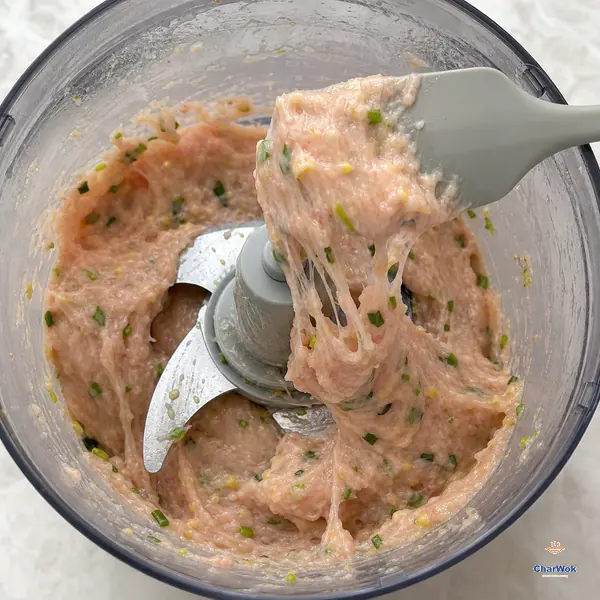
Process until the shrimp paste is cohesive, tacky and pulls into strands when lifted; a merely smooth but loose mixture will not bind securely to the bread.
- Spread a generous layer, edge to edge. Divide the paste into six portions and spread each one across a full slice of bread, all the way to the corners. If you leave a dry margin, that edge curls and burns before the center cooks. Aim for roughly 8 mm (about ⅓ inch) of filling, thick enough to stay juicy but thin enough to cook through in the pan.
- Press the sesame seeds into the shrimp, not onto it. Scatter seeds on a flat plate, lay the toast paste-side down, and press gently with your fingertips so the seeds embed into the sticky surface. Pressed-in seeds stay on through frying; sprinkled seeds fall off and scorch in the oil.
- Cut before you fry. With the assembled toast on a board, cut each slice twice corner to corner into four triangles. Cutting now means clean edges; cutting after frying means shattered triangles and sesame seeds everywhere.
- Pan-fry, then measure. Heat 2 to 3 tablespoons of oil in a wide skillet over medium. Lay the triangles sesame-side down without crowding, then flip when the seeds are evenly golden. Once the bread side is crisp, remove 2 to 3 of the largest pieces from different pan positions to a clean plate. Insert a clean thin thermometer sideways into the middle of the shrimp layer; every sample must reach 160°F / 71°C. If one is cooler, return the whole batch to the pan and recheck with a cleaned probe.
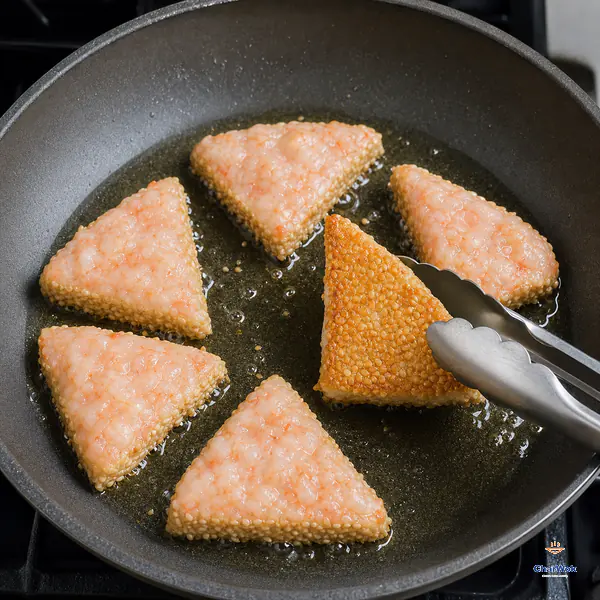
Brown the sesame side, crisp the bread side, then remove 2 to 3 large pieces from different pan positions and require 160°F / 71°C in every filling centre.
- Or air-fry, then measure. Preheat to 200°C / 400°F. Brush both sides lightly with oil and arrange the triangles sesame-side up in one uncrowded layer. Begin checking after 5 minutes, rotate pieces if browning is uneven, then sample 2 to 3 of the largest pieces from different basket positions. Every filling centre must reach 160°F / 71°C; continue cooking and recheck if any one is cooler.
When it goes wrong
Use the filling texture, spacing, browning and measured centre temperature to diagnose the result.
The bread is soggy where the shrimp sits. This is moisture migrating from the filling into the crumb. Two causes: the paste was too wet, or the toast sat assembled too long before frying. Fix it by blotting the shrimp dry, spreading an even layer and cooking in the same session.
The seeds burn but the bread is still pale. The oil is too hot. Reduce the burner before the next batch and use raw rather than pre-toasted seeds. Browning is a texture cue; still verify 160°F / 71°C in the shrimp-and-egg-white filling.
The shrimp tastes rubbery. The paste was processed too long. Stop once it turns cohesive and pulls into short strands; continued processing can make the cooked filling dense.
The filling slides off in the pan. Either you under-blended (so there is no glue) or you spread too thick and the center stayed loose. Spread thinner, and press the paste gently into the bread so it adheres before you add seeds.
Variations and what to serve it with
For a spicy version, add a small amount of chili oil. Finely diced water chestnut can add texture. Keep the ingredient amounts modest so the paste remains cohesive.
Choose bread with a close, even crumb. Brioche or Japanese milk bread makes a richer version, while small baguette rounds make canapé-sized pieces. Serve them on a shared appetizer tray with spring rolls or fried wontons.
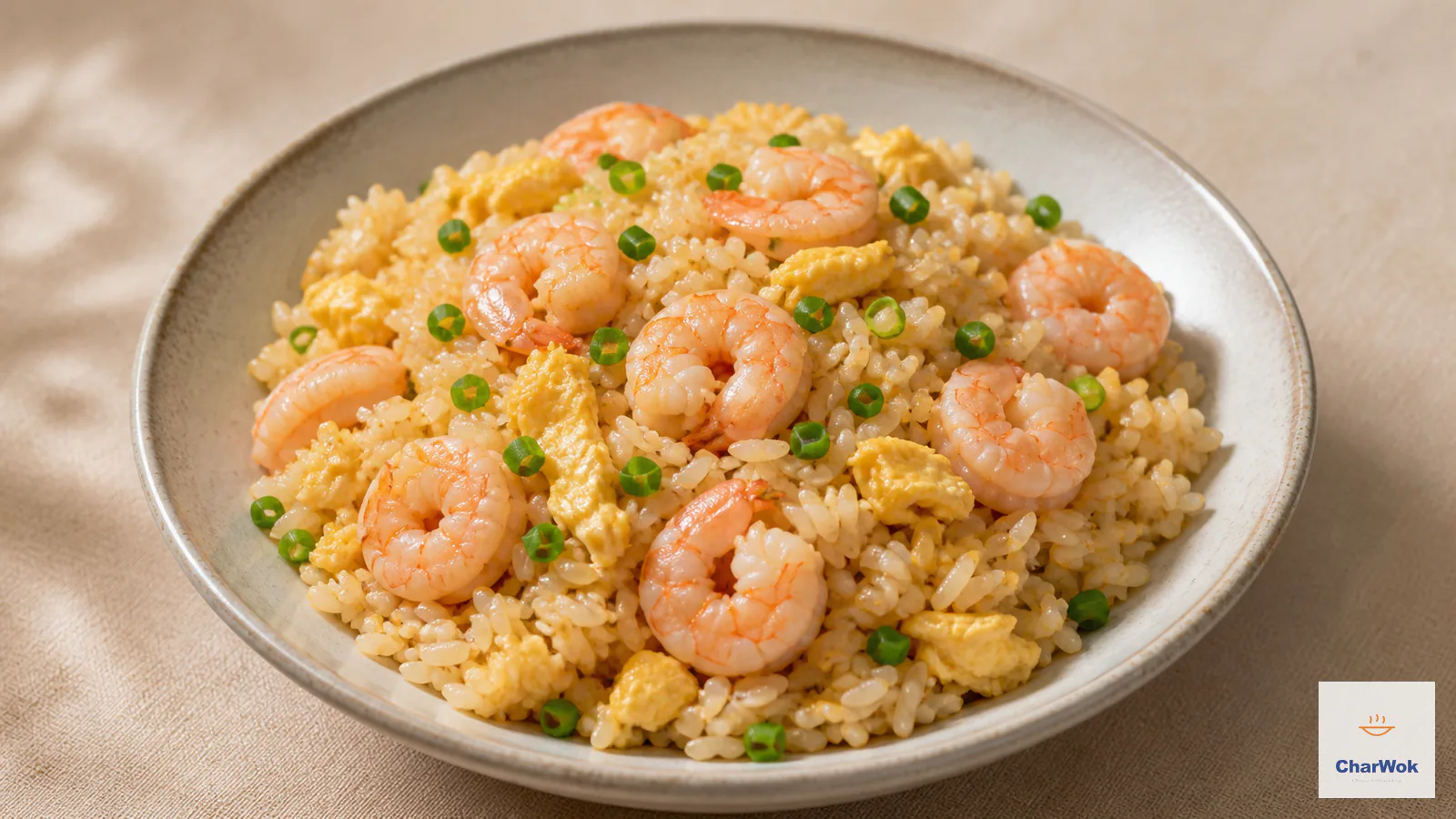
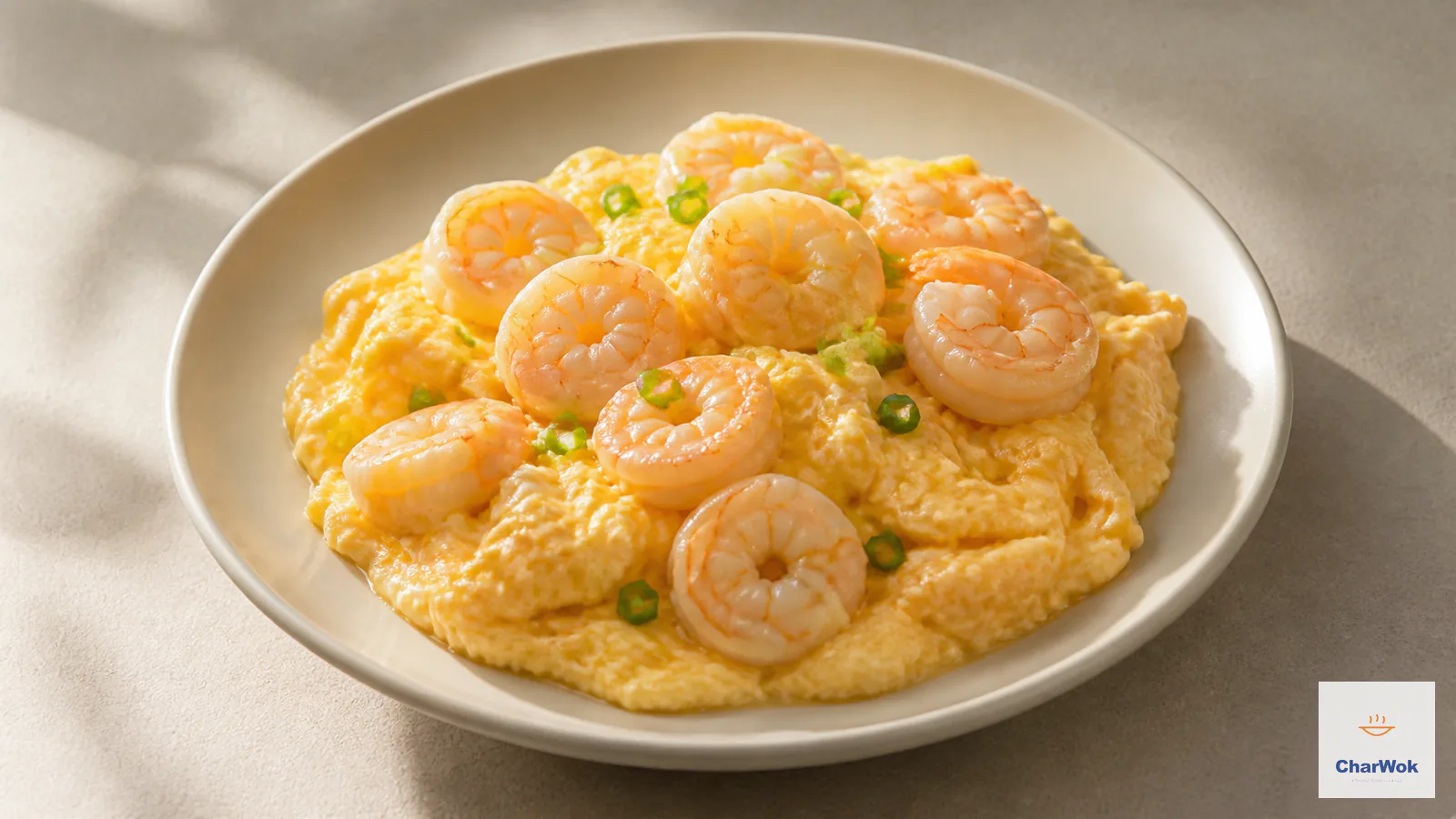
Serve shrimp toast as an appetizer with a cucumber salad, or add it to a shared table with shrimp and egg stir-fry, salt and pepper shrimp or soup dumplings.
Storing and reheating
Keep the raw paste covered at 40°F / 4°C or below and cook or freeze it within one day. Store the paste and bread separately, and assemble only when the cooking equipment is ready. Wash hands, tools and surfaces that touched raw shrimp or egg before handling cooked toast, dips or garnishes.
Refrigerate cooked leftovers within 2 hours, or within 1 hour above 90°F / 32°C, and use within 3 to 4 days. Reheat in an oven or air fryer until the filling reaches 165°F / 74°C; appliance time is only a first-check cue. Freezing assembled raw toast can damage the bread texture, so freeze the paste separately instead. See the USDA leftovers guidance.
Frequently asked questions
These answers cover substitutions, doneness and make-ahead handling.
Can I use prawns instead of shrimp?
Yes. Shrimp and prawns are interchangeable here; choose whichever is fresher or better priced.
Can I deep-fry instead of pan-fry?
Yes. Use a deep, heavy pot with oil no more than one-third full and heat it to 175°C / 350°F. Fry in small batches, then remove 2 to 3 large pieces to a clean plate and require 160°F / 71°C in every filling centre. Stay with the pot, keep a lid nearby and never use water on an oil fire. See the USDA deep-frying guidance.
Why is my bread soggy under the shrimp?
The paste was too wet, or the assembled toast sat too long. Pat the shrimp dry before blending, spread just before cooking, and keep the filling layer even and no thicker than about 1 cm.
Do I have to cut the crusts off?
No. The crust fries up crisp and adds texture. Trim it only if you want uniformly shaped pieces.
Can I make the shrimp paste ahead?
Yes. Keep it covered at 40°F / 4°C or below and cook or freeze it within one day. Wait to spread it on the bread until the pan or air fryer is ready.
How do I know shrimp toast is cooked?
Colour cannot confirm the centre is safe. Remove 2 to 3 of the largest pieces from different cooking positions, set them on a clean plate, and insert a thin thermometer sideways into the shrimp layer. Every sample must reach 160°F / 71°C.
Serve the toast after every sampled shrimp-and-egg-white centre reaches 160°F / 71°C. Keep the pieces in one layer on a rack so steam does not soften the bread.